

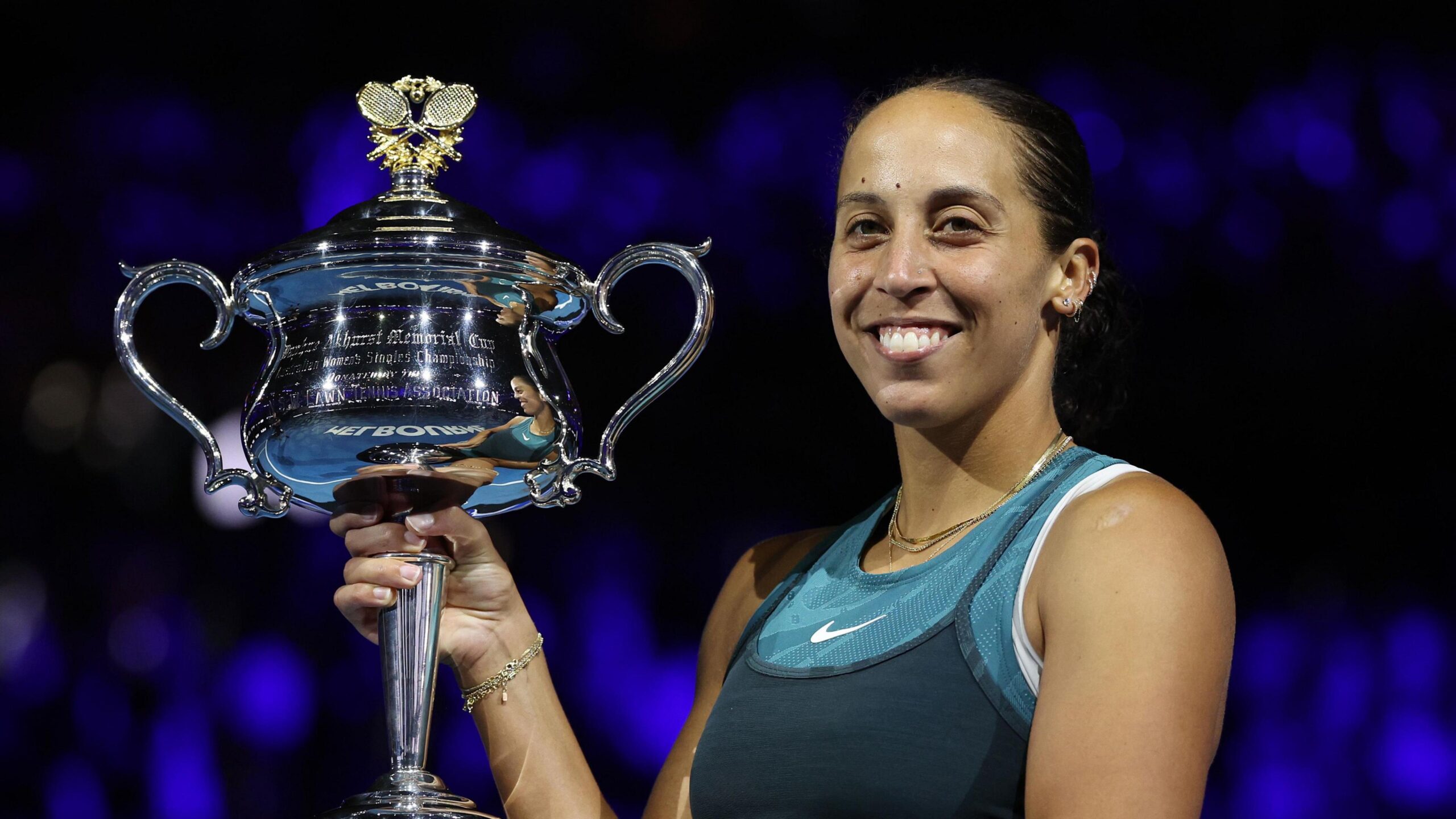

Players are demanding greater rewards from the Grand Slams based on their pulling power, and reigning Australian Open champion Madison Keys is «cautiously optimistic» about change coming.
Three-time major finalist Alexander Zverev, however, feels «little progress» is being made.
The pair have been among the star names in Melbourne addressing an ongoing point – do the Slams value them as much as they should?
Keys and Zverev are part of a group of top-20 players who held a series of discussions last year with the four majors – Australian Open, French Open, Wimbledon and US Open – about receiving more prize money and increased welfare support.
Some have questioned if the players are being reasonable. Keys believes it «absolutely makes sense» for them to ask for more.
«We obviously give a lot of ourselves to this sport,» Keys said. «As we are the product, it makes sense for us to be partners.»
Zverev said: «We’re playing the matches. We’re playing the tours. When we try to get into the politics, we don’t really have that much of a voice in it.
«Most of the time it’s a lot of investments, time-wise, from our side, but not a lot of results, which is sometime a bit upsetting.
«I don’t really feel like there’s any progress.»
-
Rivalries & records – Australian Open key questions
-
2 hours ago
-
-
‘A chapter of life’ ends – Alcaraz on Ferrero split
-
30 minutes ago
-
There are three broads areas of concern the players want addressing:
-
Prize money – a higher ratio of prize money-to-revenue in acknowledgement of what players contribute to the financial success of the tournaments, with more money trickling down the draws
-
Player welfare – how much the Grand Slams are willing to contribute to pension, healthcare and maternity pots
-
More consultation – the players want a say in major decisions made by the Slams to alleviate gruelling schedules, late finishes and elongated tournaments
Dialogue between the group of players – who are represented by former WTA chairman and chief executive Larry Scott – and the Grand Slam powerbrokers began almost a year ago.
In March, the players sent a letter to the four Grand Slams asking for a meeting.
Keys, along with Aryna Sabalenka, Jannik Sinner, Alex de Minaur, Casper Ruud and Coco Gauff, met with leaders from all four Grand Slams at last year’s French Open to discuss their concerns.
That was followed by individual meetings with each Slam at Wimbledon, attended on behalf of the players by men’s world number three Zverev and women’s semi-finalist Belinda Bencic.
The benefit of those meetings has split opinion.
Keys labelled them «the most productive conversations we’ve ever had».
«[That] leads me to be carefully optimistic for the future,» the American world number nine said on Friday.
«But I really think it’s in everyone’s best interest to continue to be really good partners to each other. We all need each other.
«We all want to try to do whatever we can to support each other.»
Zverev does not share that confidence. The 27-year-old German attended the meetings as an ATP Tour representative who was part of the player council, but felt there was too much talk and not enough action.
He puts that down to the fragmented nature of tennis governance and separate bodies – the Grand Slams, ATP Tour, WTA Tour and ITF – having their own interests to look after.
«It sometimes does feel like the governing bodies don’t get along so well,» Zverev, who was runner-up at Melbourne Park last year, said.
«It’s very difficult to get them in one room and talk about what is good for the future of tennis.
«Maybe it’s a question towards those guys more than towards players, because we are just bystanders.»

Some will have little sympathy for the players’ concerns, given the riches they earn.
The Grand Slams insist they remain open to constructive dialogue about the sport’s future. They have also strongly defended what they already offer players in terms of prize money and state-of-the-art facilities.
The Australian Open has offered record prize money of A$111.5m (£55m) at this year’s tournament, which begins on Sunday.
The figure – a 16% increase on last year – is the largest player fund in the tournament’s history.
Australian Open insiders say that figure is 21% of the tournament’s revenue, although the group representing the players point out it is 16% of governing body Tennis Australia’s total income.
«The percentage is still not where we would like it,» French Open champion Gauff said.
«I think there are still further conversations that have to be had, not just with the Australian Open but with all the Slams.
«From my last update, the collective feeling is there has been progress, but I still think it’s not where we would like to see it.»
Australian Open 2026
18 January-1 February
Melbourne Park
Live radio commentaries across BBC Radio 5 Live Sport and BBC Sounds, plus live text commentaries on the BBC Sport website and app
Related topics
- Tennis