


David SpereallYorkshire
 Getty Images
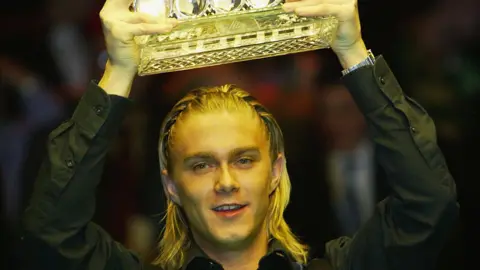
All Paul Hunter ever wanted to do was play snooker.
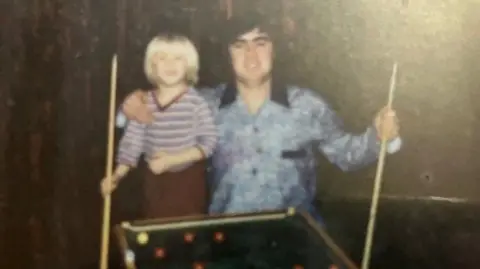
A sporting bug, caught at the age of three with the help of a tiny snooker set on his parents’ coffee table in their Leeds home, would culminate in a professional career that saw him win six major trophies in six years.
This year marks 20 years since the beloved Hunter died from cancer, days short of his 28th birthday.
But despite the loss of a generational talent that transcended the game he loved, his legacy and impact on snooker and those who knew him remain as strong as ever.
«We’d never have known in a billion years Paul would become a professional snooker player,» Hunter’s mum Kristina says.
«But he just loved it.»
Hunter’s father Alan recalls how his son «wasn’t bothered about anything else» other than snooker as a child.
 Hunter family
«He never stopped,» he says. «He would play every night after school.»
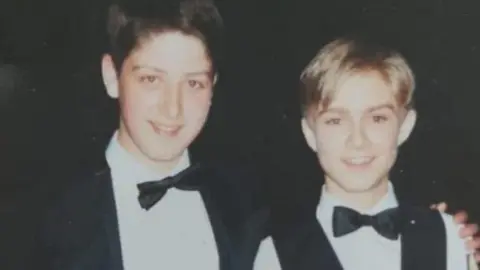
After successfully badgering his dad to take him to a local club to play on full-size tables at the age of eight, the young Hunter made the leap from table top snooker with aplomb.
His mercurial talent would be nurtured by the 1986 World Champion Joe Johnson, from neighbouring Bradford, at a now defunct club in the north Leeds suburb of Yeadon, a few miles from their home.
 Hunter family
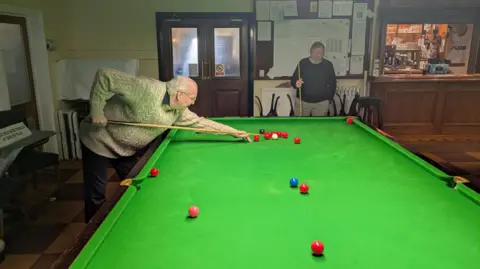
«He used to have to stand on a box and use the rest most of the time,» recalls David Lamb, who watched the young Hunter play both in Yeadon and later at the nearby Guiseley Conservative Club.
«He showed what can be achieved if you work hard at it, because snooker is hard work. It takes hours and hours of practice just to get your cueing straight.»
Lamb’s friend Michael Spence says his first impression of seeing the teenage Hunter play at Guiseley was that he was «unbelievable».
«I used to watch him practising, often with his best pal Matthew Stevens,» he says.
«He was a superb player.»
 David Spereall/BBC
With his parents’ pleas to do his homework increasingly falling on deaf ears as practice took priority, Alan and Kristina took the «gamble» of taking Hunter out of school at the age of 14 to fully concentrate on carving out a career in the game.
It paid off in spades. Within five years, their still-teenage son had won his first ranking title, the 1998 Welsh Open. A year later, he entered the world’s top 16, qualifying to play in the prestigious Masters event as a result.
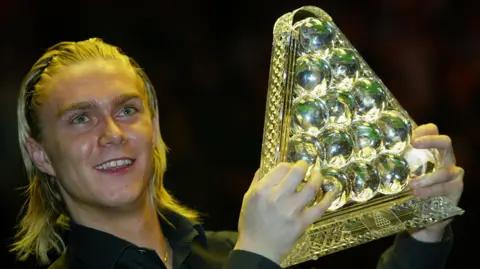
Considered one of snooker’s hardest tournaments to win because of the presence of elite players only, Hunter triumphed three times, in 2001, 2002 and 2004.
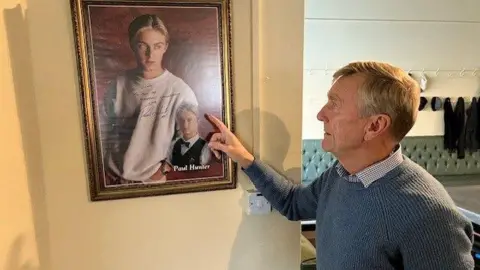 David Spereall/BBC
But for all his success on the table, away from the game Hunter’s down-to-earth charisma never left him. Several of those interviewed recall a «cheeky» sense of humour and a man who was always gracious in defeat.
«He had a great temperament did Paul,» Alan says. «He got on with everybody.
«One of the referees once told me Paul was the only player who said ‘please’ when he asked for the rest. And when he handed it back he would say ‘thank you’.»
«If you met him you’d like him,» Kristina adds. «Paul was fun. He’d make you feel at ease.»
Hunter’s widow Lindsey, with whom he had daughter Evie, describes him as an «amazing, young cheeky beautiful soul» who was «funny, kind» and «always the last to leave the party».
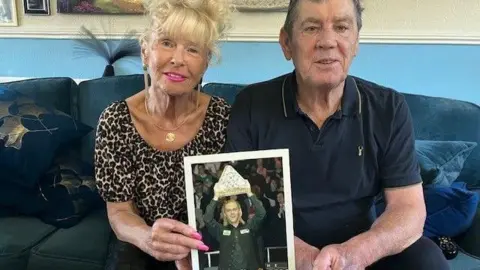 David Spereall/BBC
With his easy charm, boyish good looks and honest interview style, not to mention his considerable talent, Hunter quickly became snooker’s poster boy for the new 21st Century.
No wonder then, that he was christened ‘The Beckham of the Baize’.
According to Kristina, «He once walked into his grandma and grandad’s house and his grandma went «Ooh ‘Beckham of the Baize'». Paul looked at her and went «No, I’m ‘Paul'».
«Did he like it? Yeah I don’t think he minded it, but it was very much, ‘I’m Paul’.»
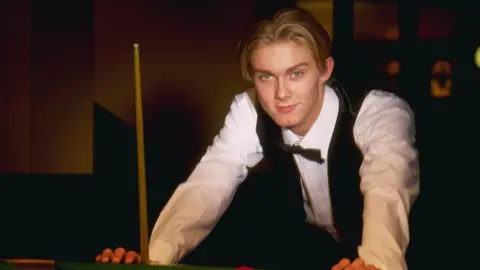 Getty Images
In 2005, a year that should marked the peak of his powers, Hunter was diagnosed with cancer and would later undergo chemotherapy.
Multiple anecdotes from across the snooker circuit attest to the man’s extraordinary willingness to fulfill commitments to exhibitions, events and press interviews, all while going through treatment.
Cash he donated was used to buy soft play toys for children on the Bexley Wing at the Leeds Cancer Centre, at St James’ Hospital, where he attended his own appointments.
Despite gruelling side effects, Hunter played on through the illness and received a standing ovation at The Crucible Theatre in Sheffield, when he turned out for the World Championships that year.
 Getty Images
When he died, in October 2006, snooker’s close-knit fraternity lost one of its most popular brothers.
«He was given an 80% chance of living,» Kristina says. «The odds were quite good. It didn’t work out.
«It’s awful. I wouldn’t wish any mum and dad to lose a child.
«I think the players all thought he would be OK and he would be back again. It will have been a shock for them.»
At their son’s funeral, at Leeds Parish Church, Alan recalls people «queuing opposite the church» and lining the road beyond.
«We didn’t expect the turnout,» he says. «They loved him in Leeds.»
Forever The Beckham of the Baize, Hunter’s parents would receive «the biggest bunch of flowers you can imagine», along with a letter of condolence, from Princess Zara Phillips, whom he and Alan had met at Royal Ascot some years earlier.
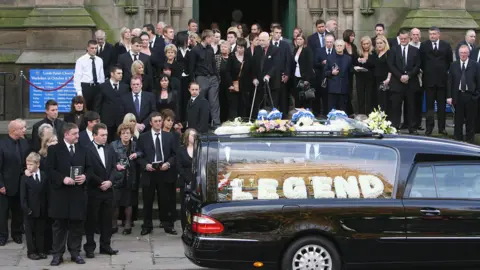 Getty Images
It’s hard to imagine many other snooker players past or present transcending the sport to the extent of rubbing shoulders with royalty.
However, Hunter’s true legacy would be felt not in palaces and castles, but in snooker halls and clubs across the UK.
The Paul Hunter Foundation, set up before his death with the help of wife Lindsey and late manager Brandon Parker, would provide free snooker sessions to children all over the country.
Chris Lovell, who is the World Pool, Billiards and Snooker’s Association’s (WPBSA’s) head of coaching and training development manager, helped deliver many of the sessions, which focused on etiquette and conduct, as well as table skills.
He says the scheme was so successful that, according to police in the Lancashire town of Accrington, the local youth crime rate plummeted.
 Getty Images
«The idea was for a platform to help get kids off the street,» Mr Lovell says.
«Snooker’s always been a game that’s opened itself up, respected its fans and believed in the grassroots. We were able to do things we wouldn’t normally have been able to do because we were doing it in Paul’s memory.
«It was such an honour and you feel very humble about it.»
The Foundation would help lay the groundwork of a huge WPBSA coaching programme, which has extended playing opportunities to children all over the world over the last 15 years.
The organisation says the women’s game and disability snooker are among the branches of the sport that have particularly benefited.
«Paul would have loved what we’ve done with the sport and where it is today,» WPBSA chairman Jason Ferguson says.
«When he was playing, it was six, seven or eight events [a year] maximum. Now it’s 20 events all over the world. He would have embraced this so much.»
Lindsey says she and Evie are «extremely proud of Paul’s legacy and what his charity has given to so many young and up and coming» players.
 David Spereall/BBC
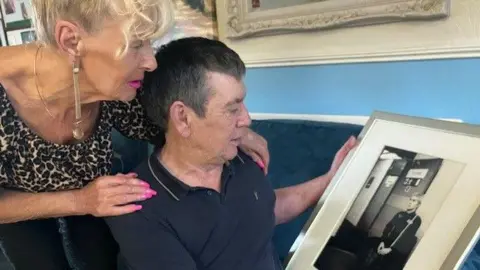
Classic footage of their son’s matches on YouTube help Kristina and Alan stay «close to him».
«I can bring it up and I can watch Paul anytime,» Kristina says. «It’s marvellous!
«I can see him, walking and moving about.
«Some people don’t want to talk [when they’re grieving], but we don’t mind talking about Paul. Before it would be tears, but I’d rather somebody talk than him not be mentioned at all.
«We’ve got [Paul’s sister] Leanne, we’ve got grandchildren and you just take each day as it comes. I can’t believe it’s been nearly 20 years.»
Alan adds: «I could talk about Paul 24/7. I’m proud to.»
Although he never won the World Championship, the highly probable notion that Hunter would have gone on to lift snooker’s greatest prize in Sheffield is etched into the sport’s folklore.
The Masters, the competition with which he is most synonymous, begins at Alexandra Palace in north London later this month. The winner will lift the Paul Hunter Trophy.
But for all his achievements, two decades after his death it is Paul Hunter’s personality, as much his dazzling snooker ability, that will ensure he is never forgotten.