


-
-
120 Comments
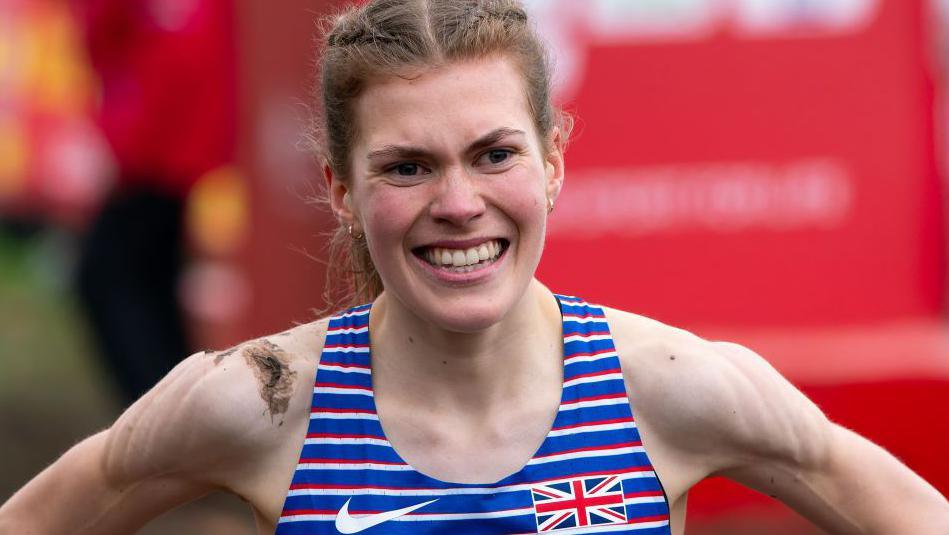
Grassy hills and boggy ditches are Megan Keith’s happy place.
For most of her running life she has considered herself primarily a cross-country athlete but, after winning the European Under-23 title two years ago, a reality dawned on her: if she was to be a professional athlete, she would need to look beyond mud and brutal ascents.
«Pretty much until the end of secondary school, I didn’t have any interest in the track. My entire running sphere revolved around cross country,» Keith, 23, told BBC Sport.
«But sponsors and British Athletics put their main focus on the track, so I’ve had to become a track runner and view cross country differently.
«It’s where my passion still lies but there’s expectations for me in the summer, so I can’t put all my eggs into being in peak form in the winter.»
The shift has proven fruitful. A European 10,000m bronze in the summer of 2024 preceded Olympic and World Championship appearances over the same distance, earning her British Athletics funding for the first time.
But the Inverness runner still makes time to follow her heart. She won European Cross Country individual and team silvers last month and will lead the British contingent at Saturday’s World Cross Country Championships in Tallahassee, Florida, which you can watch on the BBC (14:35-19:00 GMT).
Cross country, though, is no longer the prestigious discipline it once was and the number taking part at the top level has fallen. About 500 participants will line up this weekend across the various races, compared to a high of more than 800 at the turn of the century. Previously an annual showpiece event, it was cut to biennial from 2011.
Many nations do not send athletes to it, while others take skeleton teams, shorn of their leading lights, whose winter focus instead lies on training for lucrative spring road races or prominent summer track opportunities.
So, how did cross country get to this point and what does its future look like?
World Cross Country Championships 2026
Saturday, 10 January
Tallahassee, Florida, United States
Watch live coverage on iPlayer and the BBC Sport website and app (1435-1615 GMT).
‘There just isn’t any money in it’
Few people forget their school cross-country days, trudging through murky playing fields on freezing winter afternoons, invariably clad in kit sourced from the lost property bin.
While park runs, trail runs and marathons boom in popularity among the masses, cross-country appetite from the general public is almost entirely absent, likely influenced by those negative schoolday connotations.
At elite level, it is similarly shunned.
«The prestige is not close to when I did it,» said Tim Hutchings, the last British man to win a World Cross Country medal when claiming his second silver in 1989.
«There were several winters where I was among the best cross-country runners in the world and I would go to Europe, win races in Spain, France, Italy, Germany, and it was a very lucrative circuit. It was very much a worthwhile, highly recognised sport in its own right. Now, there just isn’t any money in it.»
A lack of financial incentive is critical. British Athletics funding is linked specifically to track and road performances in Olympic and Paralympic disciplines – a major consideration in Keith looking beyond cross country.
UK Sport began distributing National Lottery funding to Olympic and Paralympic sports in May 1997, allocating it according to medal potential. Before that athletics had been largely amateur until the 1980s, when athletes were left to generate their own income if they wanted to turn professional.
Other factors have also impacted the decline in stature of cross country. The domination of African runners has altered perception of competitiveness, with no-one from outside the continent making the World Cross Country men’s podium for more than two decades – or women’s podium for 12 years.
At either end of the competitive spectrum, the discipline is largely ignored and unloved but, within its own hardcore athletics club community, it remains strong.
More than 5,000 people ran at last year’s English National Cross Country Championships, while the Surrey, Birmingham, Metropolitan and Chiltern Cross Country Leagues all routinely welcome in excess of 1,500 competitors for their monthly events.
Cross-country courses are all different and distances vary at each event, although a standardised length of 10km was established at the World Championships from 2019.

Could cross country join the Winter Olympics?
While former marathon world record holder and four-time Olympian Paula Radcliffe won successive World Cross Country titles at her peak in 2001 and 2002, it is now largely seen – outside of Africa, at least – as little more than a stepping stone to other things.
But that could soon change.
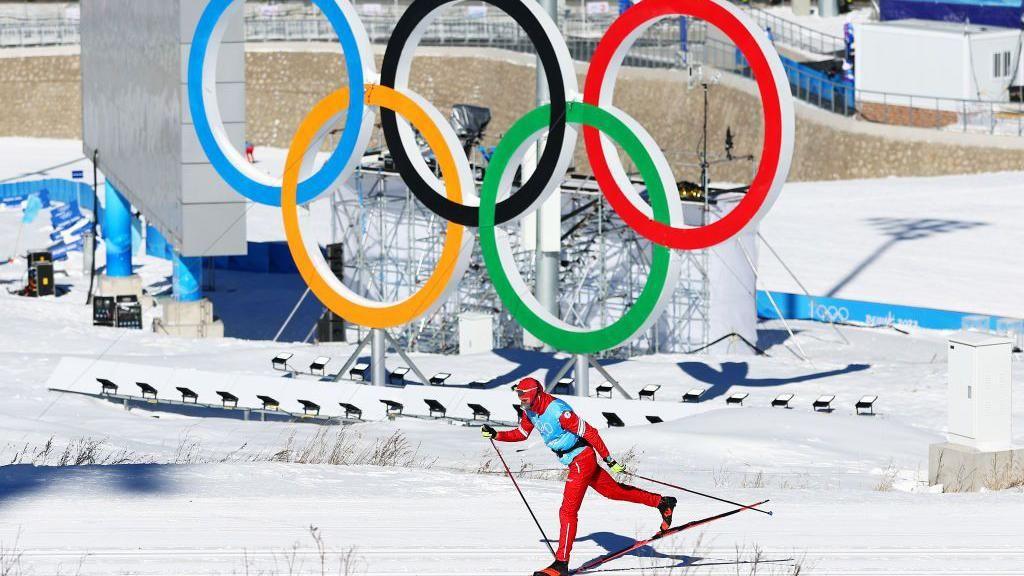
World Athletics president Lord Coe has long advocated for cross country’s inclusion in the Winter Olympics, and has suggested there is a «good chance» it could be added for the 2030 Games, despite opposition from some existing winter sports.
BBC Sport also understands Britain is formulating bids to host multiple international cross-country championships over the next few years. The last major cross-country event held in Britain was the 2008 Edinburgh World Cross Country Championships.
«Historically, we’re a great cross-country nation,» said Eamonn Martin, English Cross Country Association secretary and British men’s team manager in Tallahassee.
«If we did host more competitions, it would be a bit of a game-changer. And if there’s then an Olympic medal at the end of it, it changes everything.
«Suddenly, British Athletics would fund cross country and the individuals who are so good at it.»
Keith agrees, suggesting it would generate greater exposure and encourage athletes to take it more seriously.
«It’s exciting,» she said. «If we had cross country in the UK at the highest level more regularly, I wouldn’t be surprised if more of our best track runners do cross-country races.
«I would be really happy if cross country got the respect it once had and deserves. It’s now seen as second fiddle to the track and road, but it’s the purist form of distance running for me. There’s so much potential.»
Related topics
- Athletics
-
Summer sports would ‘dilute’ Winter Olympics
-
14 November 2025
-