

The video assistant referee creates debate on a weekly basis in the Premier League, but what are the methods behind decisions and are they accurate?
This season, we will analyze significant events to clarify and detail the procedure regarding both the VAR guidelines and the rules of the game.
All images photo credit: NBC
 Andy Davies (@andydaviesref) is a former Select Group referee, boasting over 12 seasons on the elite list, officiating in the Premier League and Championship. With vast expertise at the highest level, he has worked within the VAR framework in the Premier League and provides a distinct perspective on the methods, reasoning, and protocols that occur on a Premier League matchday.
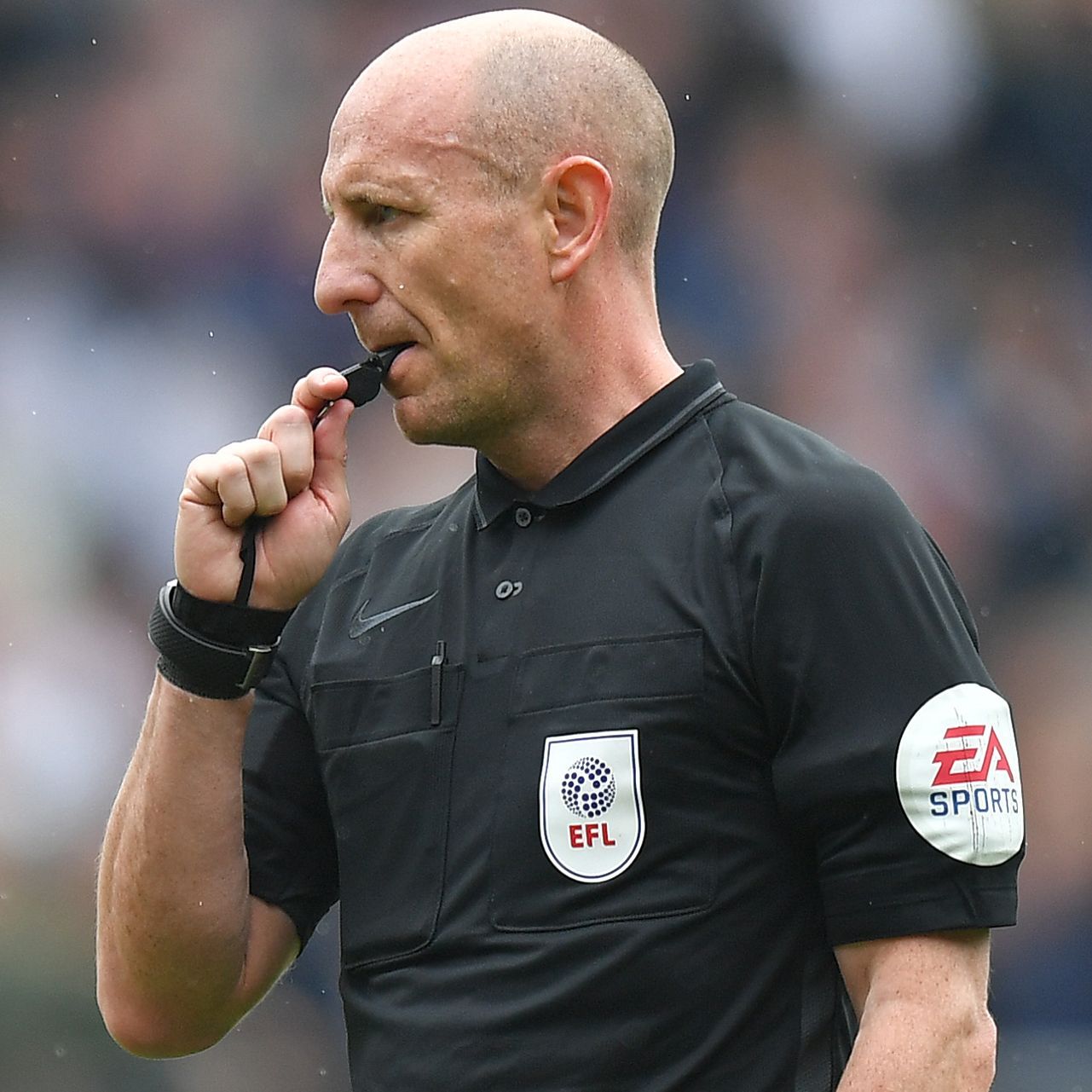
Referee: Michael Salisbury
VAR: Nick Hopton
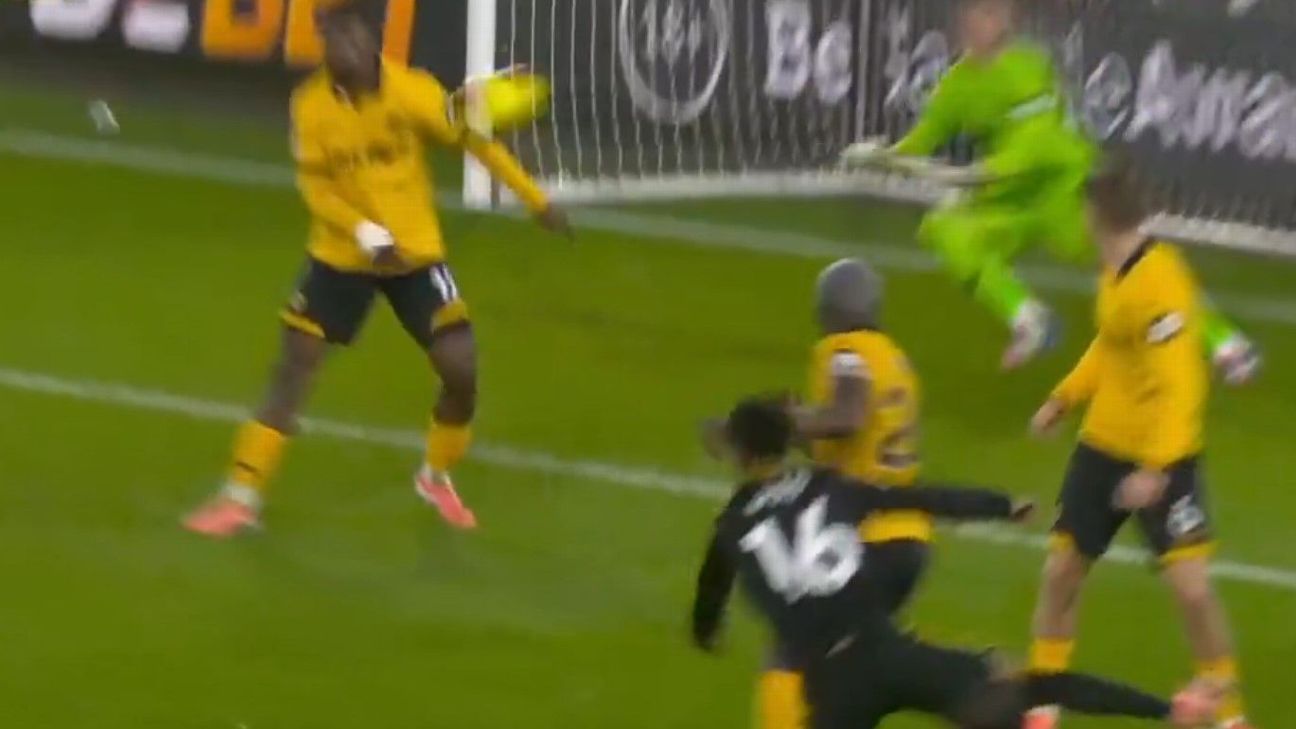
Incident 1: Potential handball infraction by Wolves defender Emmanuel Agbadou in the penalty area.
Time: 38 minutes
What occurred: The attempt by Manchester United winger Amad Diallo hit Agbadou’s arm, but referee Salisbury deemed it not a handball violation and allowed play to proceed.
VAR decision: The referee’s determination of no penalty was reviewed and upheld by the VAR, concluding that the incident did not constitute a handball infraction.
VAR review: The VAR review process necessitated applying specific handball criteria against the available footage to assess whether an infraction had occurred:
– Did the player intentionally touch the ball with their hand/arm by moving the hand/arm towards the ball?
– Did the player touch the ball with their hand/arm making their body unnaturally larger?
A player is viewed as having made their body unnaturally larger when the position of their hand/arm is not a direct result of, or justifiable by, the player’s bodily movement in that particular situation.
The ball hit Agbadou’s left arm rapidly, and it was positioned where the referee had no clear sight, so his on-field communication would have reflected that situation. After reviewing all evidence, the VAR concluded that the area of the arm where contact was made, combined with the action/level of movement, ruled this as not being an infraction.
Verdict: This appeared and felt like a handball in real-time. After viewing the replays, I believe this to be a missed VAR intervention.
The ball hit the lower part of Agbadou’s short sleeve on his arm, which qualifies as a handball violation. Furthermore, there was a clear movement by the Wolves defender’s arm toward the ball — it was away from his body, thus making his body unjustifiably larger. An on-field review (OFR) should have been conducted.
Incident 2: Possible handball infraction by Wolves defender Yerson Mosquera in the penalty area.
Time: 80 minutes
What occurred: This time, Amad’s shot struck the arm of Mosquera. The Wolves defender leaned into the shot, with the ball deflecting off his upper arm, but the referee, who had a clear view, did not regard it as a handball and allowed play to carry on.
VAR decision: This time, the VAR believed the defender’s action met the criteria for a handball violation and recommended an OFR.
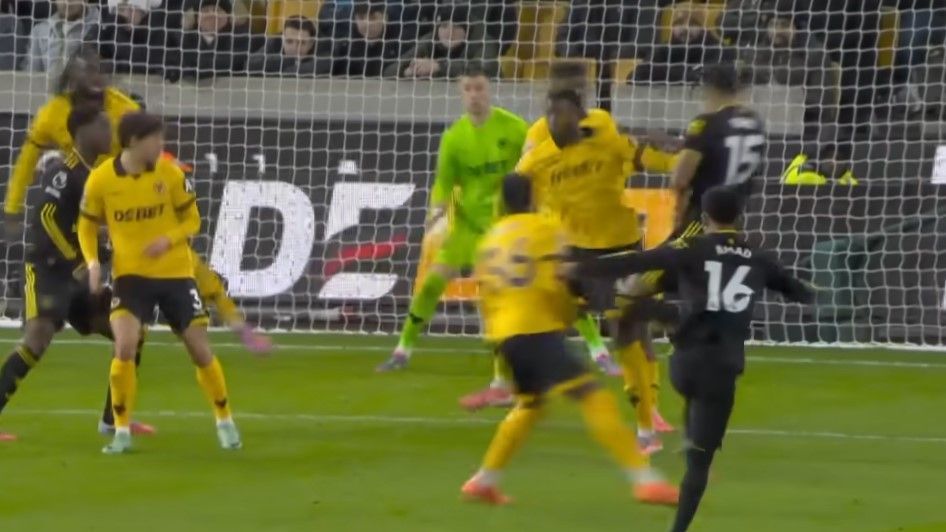
VAR review: Unlike the earlier incident in this match, referee Salisbury had a good sight of this situation, and his live communication likely described Mosquera’s actions as unintentional. The VAR disagreed and noted that Mosquera not only leaned into the shot, but exhibited a deliberate secondary movement of the arm toward the ball. Once Salisbury reviewed the footage through the OFR, he granted United a penalty and issued Mosquera a yellow card.
Verdict: In my estimation, this was a correct action. Comparisons will naturally arise between these two similar incidents during the match, but handball is a complex law to apply consistently considering the subjective factors involved. That being said, these two incidents are likely to be seen as relatively straightforward calls from a VAR standpoint, and both should have warranted intervention.
Referee: Simon Hooper
VAR: Tony Harrington
Incident: Possible handball as the ball touched the arm of Brighton’s Georginio Rutter three seconds before he scored the equalizing goal.
Time: 90+1 minutes
What occurred: In the closing moments of this match, Rutter netted an equalizer for Brighton with the ball seemingly hitting his arm in the buildup. Brighton’s Charalampos Kostoulas challenged for a high ball with an overhead kick, and the ball ended up with teammate Rutter. He initially controlled it with his right thigh, but then it deflected onto his right arm and onto his boot, enabling him to take his first shot on goal, which was saved by West Ham goalkeeper Alphonse Areola. Brighton defender Jan Paul van Hecke then played the ball back to Rutter, who scored on the second attempt. (Watch in U.S.)
VAR decision: The referee’s ruling of a goal was checked and validated by VAR — it was determined that Rutter’s arm was in a natural position and that he did not intentionally handle the ball, while the contact with his arm was not immediately before he scored.
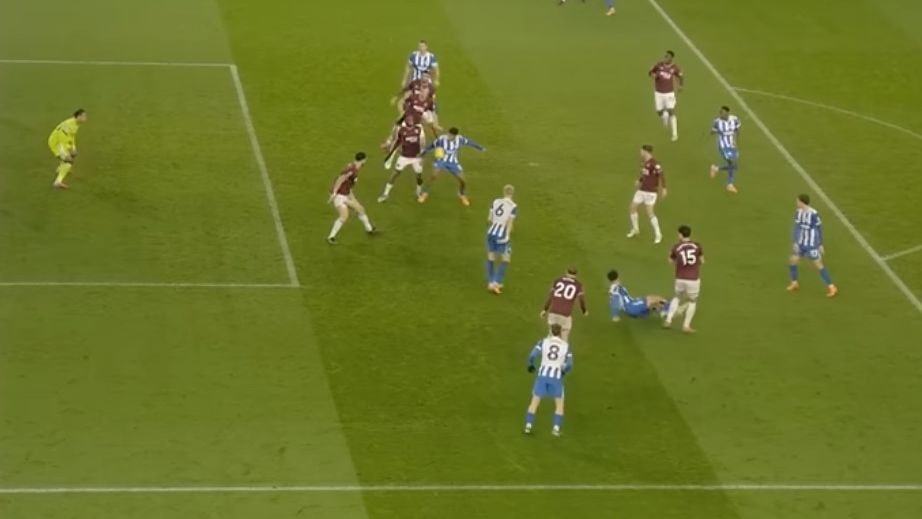
VAR review: The VAR review focused on the ball hitting Rutter’s arm in the buildup to scoring. The VAR had to decide whether Rutter’s action was intentional … as an accidental contact with the arm could not be classified as an offense. The VAR concluded that Rutter’s arm was in a natural and justifiable position for his action at that time.
Verdict: This scenario will undoubtedly spark some discussion, especially since the outcome was a goal. West Ham manager Nuno Espirito Santo later remarked that both the referee and VAR misinterpreted the law.
While I acknowledge that there is a degree of subjectivity in the decision-making process regarding whether the movement was intentional, it seemed that the outcome was justifiable since the goal was not scored until the following phase of play.
Interestingly, according to the law, had Rutter scored from his initial attempt, the goal would have been disallowed, irrespective of whether the ball striking his arm was deliberate or accidental. Nonetheless, the fact that Areola saved the first effort reset the attacking phase and canceled any offense from occurring.