

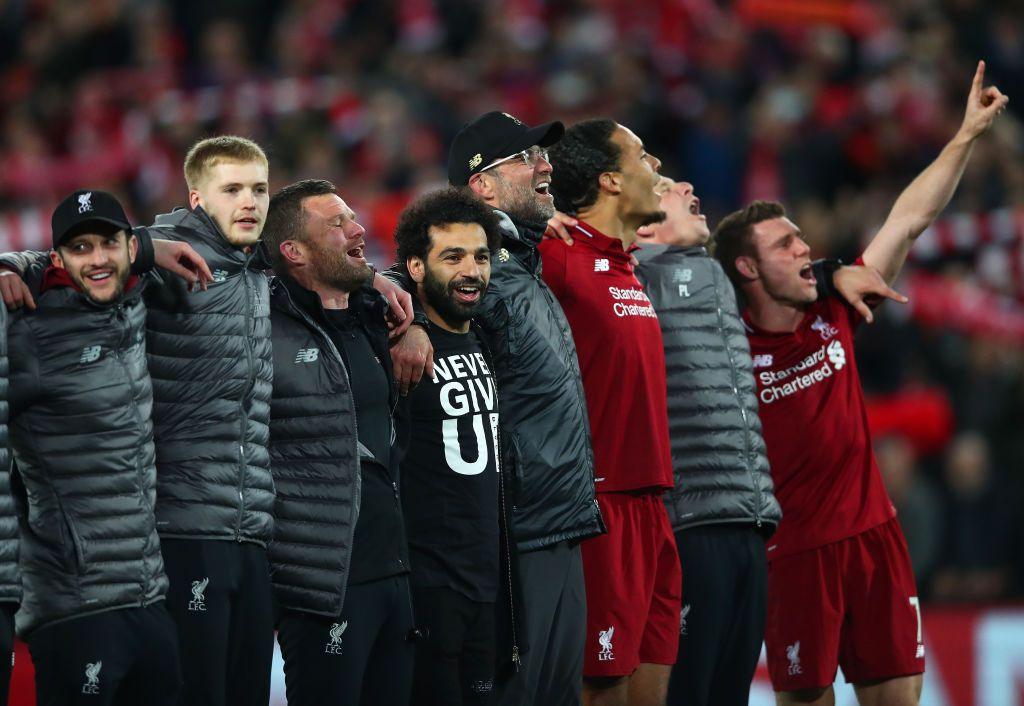
During the eight-and-a-half years he has spent at Liverpool, Mohamed Salah has been beloved by supporters, who rank the ‘Egyptian King’ among the club’s greatest ever players.
But since his unexpected declaration he feels scapegoated by Liverpool for the club’s poor run, having been picked as a substitute for three consecutive matches by manager Arne Slot, Salah’s character has been called into question by fans, former players and beyond.
So who is Salah the man – away from the latest headlines?
Over the past few months, BBC Sport has spoken to some of those who know him best to find out more about the personality and resilience of the man behind the goals, the glory, and the gossip.
Mo Salah: Never Give Up
Available now
‘You only have problems with Mo if he is not playing’
Salah’s relentless intensity and refusal to accept lower standards from himself or those around him have underpinned Liverpool’s success, and perhaps also explain why he has found criticism of his diminished role tough to handle.
«We are all massively influenced by our past – how we were raised, where we grew up,» says Jurgen Klopp, who won every major trophy in English and European football while managing Salah at Anfield. «Mo knew early on [in his life] that he had to do more than others.
«He always developed. He never stops. That is his mindset.
«After each summer break he came back and had a new skill. It was like he had spent the whole time just practising one particular type of pass.
«We pushed each other, just to make sure that we would never stop. And we never did stop. That moment lifting the Premier League bonded us for life. He will be remembered as one of the greatest of all time.
«I wouldn’t say he is easy to manage, but he is also not difficult to manage. You [only] have problems with Mo Salah if he is not playing or you take him off.»
Salah has been criticised by some for not giving more frequent media interviews before his intervention in the mixed zone at Leeds’ Elland Road, particularly after defeats and poor performances.
He has been accused of demonstrating a lack of leadership. But he has often delivered calls to arms to fans on social media in difficult moments, and those who have played alongside him describe Salah as a man who refuses to give up and is capable of inspiring others.
«He will always be trying to prove someone wrong,» says former Liverpool team-mate Adam Lallana.
«He is not macho. I would often tell my children about how he behaves, how he doesn’t get too high in good moments, doesn’t beat himself up too much in low moments. He would always remain completely focused on the job in hand.
«I would look at him and it would make me feel calm because of how in control he would be all the time.
«Knowing Mo, he will always be fighting, being resilient, and trying to find ways to better himself.»

‘He wants to be the best at everything’
Salah defended his record when speaking at Elland Road, and compared himself to England captain Harry Kane – delivering what he felt was a reminder to those inside and outside of Liverpool who have forgotten what he is capable of.
A level of arrogance is perhaps to be expected in all elite athletes, and some believe it has powered Salah to the heights he and Liverpool have reached.
«He is a really nice guy, considering the success he has had – being a superstar around the globe,» says James Milner – Liverpool’s vice-captain during most of Salah’s time at the club.
«He plays as if he has a chip on his shoulder. He wants to be the best at everything – he even got a chess teacher to improve his game, and gave me a thumping a good few times.
«You need different types of leaders, and Mo is a big leader in that group, in terms of the standards he set every day. When you have young players come and sign, they see him and it’s ‘this is what is takes to be a top player, this is what it is to be a Liverpool player’.»
That desire to always be the best became competition – fraught at times – with team-mate Sadio Mane, Liverpool’s other flying forward who played on the opposite wing to Salah for five seasons.
«Were they best friends? No,» Klopp says. «Could Mo have passed the ball a few times when he tried to finish it off himself? Yes. But on the pitch they supported each other, they fought for each other.»

‘Mo has lifted the heads of all of us’
Salah is more than just a footballer – he is a global sociocultural icon, being named one of the world’s most influential people, steering conversations on human rights, and changing attitudes towards Muslims through demonstrations of faith.
He was born in a rural village – Nagrig – about 100 miles from Cairo, where most of the roughly 15,000 inhabitants work as farmers and more than half live in poverty.
That such a region could produce one of the world’s greatest athletes borders on impossible.
«What already set him apart as a kid was his discipline,» says Maher Anwar Shtiyeh – mayor of Nagrig. «He remains deeply tied to his roots, despite fame and global recognition.
«He only finds real happiness in his village spending time with his family and friends. He is a role model for the youth of Egypt, the Arab youth, and the youth of the whole Islamic world. He has lifted the heads of all of us.»
As a child, Salah would travel up to five hours by minibus from his village to the capital, where he played youth football for top-flight club Arab Contractors.
That helped instil a resilience that has guided him throughout his professional career, alongside support from loved ones.
«You have to be mentally so strong as a young kid following your dream like that,» says former international team-mate Ahmed Elmohamady.
«His wife is from the same village. They grew up together, which is great because she knows everything about him and has supported him all the way.
«Now anyone in the village who asks him for support, he supports them. It shows what a great human being he is.»
Since leaving Egypt, Salah has maintained close ties with Nagrig and financed an ambulance station, a charitable foundation and a religious institute in the area.
Salah has proudly made his faith visible throughout his career – he prays both when walking onto the pitch and after scoring goals.
«When I first met Mo, he was coming here quite regularly,» says Shafique Rahman – Imam at Liverpool Mosque and Islamic Institute. «He would arrive a little bit late after finishing training. We had people waiting outside who wanted to see him, but nobody would bother him during prayer.
«The nature of the religion is that everybody is the same in the eyes of God. When people come to prayers they stand extremely close, touching each other’s shoulders. Mo felt very safe here.»
‘To get up and want to be the best every day – that’s a different mindset’
When Salah first moved to England – signed by Jose Mourinho’s Chelsea after impressing for Basel in Switzerland – he struggled to impose his personality in a squad full of established stars, and lacked self-belief.
«When I first met him, he was 21 – very innocent,» says former team-mate Mark Schwarzer. «He was coming to London – a big city, different culture – and I think he was a bit timid.
«When he signed, he was coming into a changing room packed full of international stars – players that were used to winning, and a manager that was a legend of the club. For new players, it was sink or swim.
«The more he didn’t score, the more frustrated he became. There was a moment in the changing room when Jose actually kicked a table, and was directing a lot of his frustration towards Mo, and he took him off. Mo was visibly upset.
«It’s credit to him, his determination, his dedication, everything, to go on and deliver what he has done.»
Salah rebuilt his career in Italy’s Serie A – first in a loan spell with Fiorentina then at Roma, developing a reputation as an on-field leader and ultimate professional.
«He was just different,» explains BBC pundit and former England and Manchester City defender Micah Richards, who played alongside Salah at Fiorentina. «You get those characters that just do everything by the book – he was that guy.
«He would always be in bed early, always be eating healthily. He clearly thought, ‘I’m going to show everyone exactly what I can do. All those who have doubted me are going to eat their words.’ That’s exactly what he did.»
For a young African man to set standards for European colleagues to follow was a challenge in itself.
«To succeed in Europe you have to understand the culture of where you are playing, where you are living, without losing any of your principles,» says former Egypt striker Mido, who played for Tottenham, Roma and Ajax among others. «This is the balance that he has achieved.
«He has made young boys in Africa dream – ‘If someone who comes from the background as I do made it to the top, why couldn’t I make it?'»

‘Mo has left a profound mark on me’
Even before Salah’s comments following the 3-3 draw with Leeds, doubts about his future were arising.
Inside Liverpool, concerns had already been raised about his performances, before transfer rumours were given further encouragement this week, with sources telling the BBC the Reds are open-minded about selling the 33-year-old.
Salah is not the only Liverpool hero whose time at the club – which he and Slot have said could be up in the January transfer window – has (potentially) ended with public denigration.
In different contexts, Javier Mascherano, Fernando Torres and Trent Alexander-Arnold have met similar fates, while shirts bearing the legendary Steven Gerrard’s name were set alight in the street when he was on the verge of joining Chelsea in 2005.
If this is the end of Salah and Liverpool’s love affair, the human impact he has had on those around him will not be forgotten any time soon.
«He was one of the first people to welcome me, and did so in such an incredible way,» says Luis Diaz, who played alongside Salah in Liverpool’s forward line for three-and-a-half years before joining Bayern Munich earlier this year.
«He came over to me and said: ‘if you ever need my help, I’m here for you.’ I remember him telling me on the pitch: ‘Let’s try this… let’s make this move so that it works.’ And then it would work in the match.
«To share the moment lifting the Premier League with him, to see how happy he was, how much he was enjoying it, was an incredible feeling.
«He is always wanting to be a better player, to be a better person, and he has left a profound mark on me.»
Related topics
- Egypt
- Liverpool
- Premier League
- UEFA Champions League
- Football