



-
-
19 Comments
Packing down together in the Sale front row, Bevan Rodd and Ewan Ashman used to be on the same team.
On Saturday, at Murrayfield, they could still have been.
In April 2021, then-England coach Eddie Jones dispatched forwards coach Matt Proudfoot to Sale’s training ground to talk to both players, as then uncapped, about their international ambitions.
Ashman – who started Scotland’s opening Six Nations game in Rome but who misses the Calcutta Cup through injury – was born in Canada and raised in Manchester, but his father is from Edinburgh.
Rodd, born in Dunoon in western Scotland and raised on the Isle of Man, has English heritage on his father’s side of the family.
Under rugby’s rules, Rodd and Ashman could play for either England or Scotland.
They opted for different routes.
Seven months after Proudfoot’s visit, Ashman scored a try on his Scotland debut against Australia at Murrayfield. Six days later, also against the Wallabies, Rodd appeared for England for the first time.
Given the countries’ shared border and history, hundreds of prospects face the same choice.
England wing Tom Roebuck was born in Inverness. Henry Pollock, whose parents are both Scottish, used to support them instead of England as a child. Fin Smith, whose grandfather played for Scotland in the 1950s, could also have worn blue.
For Scotland, scrum-half Ben White, a serial Calcutta Cup try-scorer, was born in Stoke, captained England’s Under-20s and even appeared for them in a non-Test fixture against the Barbarians.
Centre Huw Jones moved to England as a toddler and stayed for the rest of his childhood. Full-back Tom Jordan has a Blackpool-born grandmother.
The battle to secure these dual-qualified talents continues right up until they are «captured» – via a senior or second-string appearance for a country – but it starts much earlier.
Scotland v England
Men’s Six Nations
Saturday, 14th February at 16:40 GMT
Scottish Gas Murrayfield
Live commentary on BBC Radio 5 Live, BBC Radio Scotland, BBC Sounds and the BBC Sport website and app
Two weeks ago, 12 miles from Twickenham, Scotland parked coaches on very English lawns.
In the stately surroundings of RGS Surrey Hills school in Dorking, a group of Under-16 and Under-18 prospects ran through drills under the eyes of staff from Scottish Rugby’s SQ (Scottish Qualified) programme.
The scheme is designed to establish connections with youngsters who, like Ashman, Rodd and many others, live and play outside of Scotland, but could one day represent its senior sides.
The SQ programme’s coaches, which include English-born former Scotland international Peter Walton, act on tip-offs from schools and clubs.
They also set up a recruiting station at high-level age-grade rugby events, inviting those with the ancestry and interest to scan a QR code and enter their details.
All countries work to maximise their talent pool.
England are keen to ensure that Under-20 Rugby World Cup winner Junior Kpoku, who plays for Toulon and could become available to France, will go on to wear white at senior level.
South African-born centre Benhard Janse van Rensburg will soon be eligible for England on residence grounds after the Rugby Football Union successfully asked for a review of his tie to the Springboks.
But for nations with a smaller talent pool – Scotland has about 50,000 club players, compared to England’s 880,000 – there is a higher premium on making sure a particular promising youngster chooses to represent them.
What are the factors that come into a player’s decision?
First and foremost, there is national pride.
Ashman said that back in 2021, he explained «quite bluntly» to England’s coaches that he wanted to play for Scotland.
Sometimes, however, players can be torn between different parts of their identity.
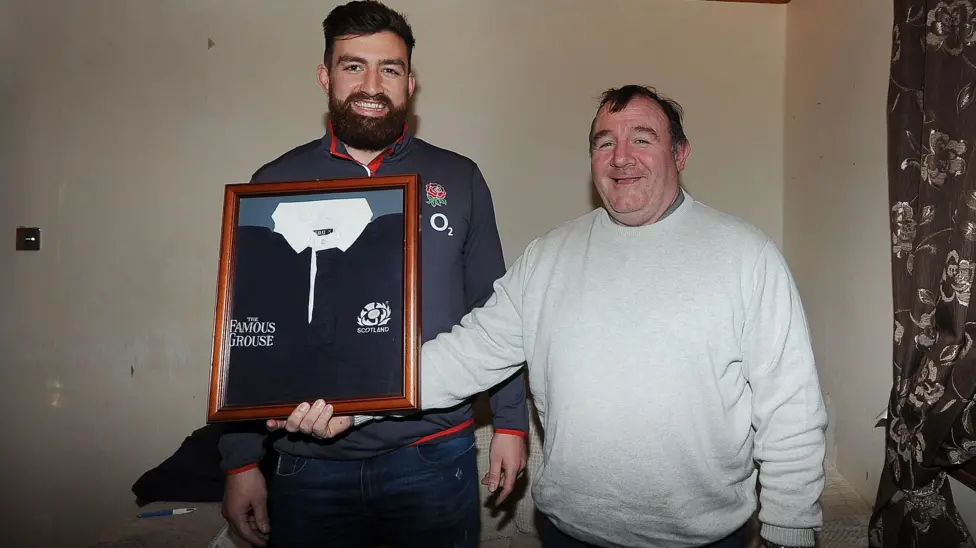
Flanker Gary Graham, the son of former Scotland prop George Graham, grew up in Carlisle. He attended a training camp with England and, perhaps in an effort to wind up his father in a joint interview, told the Daily Mail in February 2018 that he «feels more English than Scottish».
Within a year later, having not played for England, he made his debut for Scotland, assuring fans that he has «always wanted to play for his country».
Other factors can sway players.
Money is one.
England’s best players can earn more than £150,000 a year for a season that involves around 12 Tests as part of their union’s new central contract system.
Scotland’s players get less. Their match fees are around £5,000 a Test, with bonuses dependent on the team’s final standing in the Six Nations table and their own personal involvement in the campaign.
Players might however make a calculated decision on which nation offers the surest path to the Test stage.
Scotland’s smaller player numbers may be a disadvantage overall, but for individuals it translates to a shorter route to international contention and less chance of being churned out once you get there.
Dual-qualified wing Ruaridh McConnochie won two caps for England in 2019, but was quickly discarded from Eddie Jones’ notoriously high-turnover set-up, leaving him in Test limbo.
Picking Scotland, as he did after a three-year stand down period later in his career, may have meant more international opportunities.
Scotland officials make the alignment and communication between Gregor Townsend’s senior side, national second-string and age-grade teams and the country’s two professional outfits a selling point to prospects.
Players’ decisions at international level also have a knock-on effect on their club careers.
Ben Vellacott, who has represented Scotland though age-grade levels, turned down an invite to be part of Townsend’s senior squad in 2018 and instead attended an England training camp.
«As much as I wanted to play for Scotland, I had to be careful I wasn’t without a job.» he told BBC Sport in 2021.
Vellacott was coming to the end of his contract with Gloucester and, with Prem rules requiring clubs to meet a quota of English-qualified players, playing for Scotland and becoming ineligible would have made him a less appealing signing for English clubs.
«You have got to be careful,» Vellacott added.
«You can play once or twice for your country, struggle to pick up a contract and then slip down the pecking order.»
Vellacott went on to move to Edinburgh and make his Scotland debut in the 2022 Six Nations.
-
Pilates pain and spotting space – how Ford stays in the fly-half fight at 32
-
1 day ago
-
-
Scotland change four for ‘biggest game of season’ with England
-
14 hours ago
-
-
Captain Itoje returns to England XV to face Scotland
-
2 days ago
-
Conversely, sometimes English rugby’s selection policies are more likely to drive talent towards Scotland.
Steve Borthwick is restricted to picking players from English clubs. Townsend is free to pick whoever he likes, from wherever they play.
Scotland internationals do not have to pick between playing for their country versus broadening horizons and inflating bank balances abroad.
White for instance, would not have been able to take up the chance to play with club Toulon in France and remain on England’s pathway. Jones will join him next season on the Cote d’Azur and remain an integral part of Scotland’s plans.
For younger prospects, education can be key, with Prem clubs’ partnerships with prestigious schools and university courses luring players across the border and potentially into the English system.
The Scottish influence at Newcastle Red Bulls could be a development to watch.
Townsend is working as a part-time consultant at the club, which was bought and lavishly backed by the energy drink giant last summer. His former Scotland team-mate Jonny Petrie is managing director and fellow Scot Neil McIlory is general manager.
Gavin Vaughan, Scotland’s chief analyst and a long-time part of Townsend’s back room, is reportedly joining the club as head of recruitment at the end of the Six Nations.
Among Newcastle’s spate of recent signings are George Turner and Elliot Millar Mills, both part of Scotland’s matchday 23 on Saturday.
Could Newcastle be a friendly English outpost for Scottish-qualified talent?
That is still to be seen.
One thing isn’t though.
With the residency period for players to qualify for a nation having been increased from three to five years in 2021, so-called «project» players are now a rare species.
It makes little sense to invest such time and money importing a player who might only become available for one Rugby World Cup cycle.
Instead the cross-border fight for talent with immediate credentials is hotter than ever.
Related topics
- Scotland Rugby Union
- England Rugby Union
- Rugby Union
-
Listen: Sport’s Strangest Crimes – Bloodgate
-
Listen to the latest Rugby Union Weekly podcast