
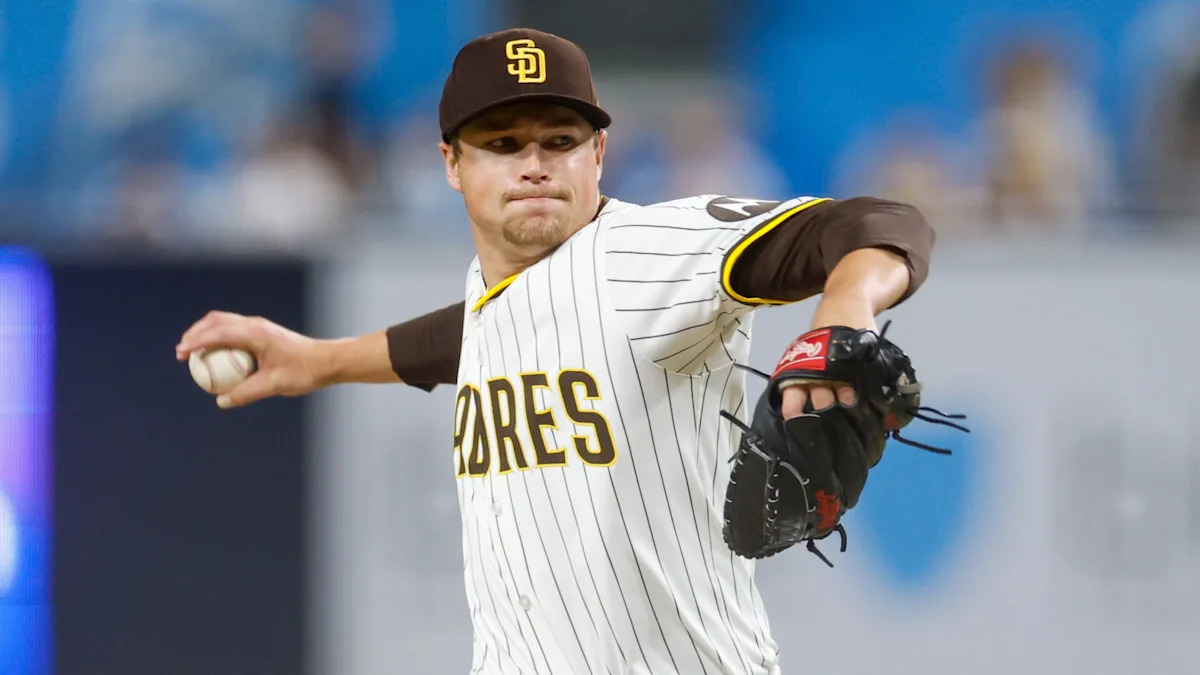

Determining where to take your relievers, particularly in category leagues, is an annual draft-season dilemma.
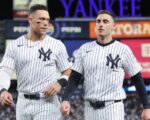
On one hand, you’ve got the elite closers that come with a hefty price but help across the board with ratios and strikeouts, on top of having the job security to bank on saves. Jhoan Duran and Andrés Muñoz join this class, with each setting career-highs in saves while producing stellar ratios and accumulating strikeouts. However, not all at the top are safe, as the position is perhaps the most volatile in baseball. Mason Miller finished as one of the game’s top relievers. Yet, he was relegated to a setup role behind Robert Suarez, who had a spectacular year in San Diego, leading the National League with 40 saves. Devin Williams had high expectations in New York but fell flat as he struggled in a new environment. Despite the down seasons, you’ll see in our rankings that the Rotoworld staff believes the two are in for bounce-backs.
Advertisement
You’ve also got your veterans who are accustomed to pitching the ninth and have earned the trust of managers across baseball, your Raisel Iglesias and Kenley Jansen. Then the late-round darlings. These come in the form of breakouts or bounce backs in ambiguous situations. Last season, it was Aroldis Chapman returning to form and having his most dominant year on the mound in his 16th season.
Whether you subscribe to the early closer strategy or prefer to shoot your shots at saves in the late rounds, the Rotoworld staff is here to help with consensus rankings, projections, and outlooks for the top options.
Other position previews:
⚾️ Coming soon: MLB returns to NBC and Peacock in 2026! In addition to becoming the exclusive home of Sunday Night Baseball, NBC Sports will broadcast MLB Sunday Leadoff, “Opening Day” and Labor Day primetime games, the first round of the MLB Draft, the entire Wild Card round of the postseason, and much more.
Advertisement
⚾ 2026 Fantasy Baseball Reliever Rankings
** Rotoworld staff consensus rankings **
|
Rank |
Player |
Pouliot |
Samulski |
Schiano |
Short |
Montanez |
Bissell |
Shovein |
Crawford |
Consensus Avg |
|---|---|---|---|---|---|---|---|---|---|---|
|
1 |
Mason Miller |
1 |
1 |
1 |
2 |
1 |
1 |
3 |
3 |
1.625 |
|
2 |
Edwin Diaz |
2 |
3 |
3 |
1 |
2 |
2 |
1 |
2 |
2 |
|
3 |
Jhoan Duran |
5 |
2 |
2 |
3 |
7 |
6 |
4 |
4 |
4.125 |
|
4 |
Cade Smith |
3 |
4 |
4 |
5 |
3 |
5 |
5 |
5 |
4.25 |
|
4 |
Andres Munoz |
8 |
5 |
5 |
4 |
5 |
4 |
2 |
1 |
4.25 |
|
6 |
Devin Williams |
6 |
6 |
6 |
6 |
4 |
8 |
10 |
6 |
6.5 |
|
7 |
Aroldis Chapman |
4 |
8 |
7 |
7 |
8 |
7 |
7 |
9 |
7.125 |
|
8 |
David Bednar |
9 |
7 |
8 |
8 |
6 |
9 |
6 |
8 |
7.625 |
|
9 |
Josh Hader |
7 |
10 |
14 |
9 |
12 |
3 |
8 |
10 |
9.125 |
|
10 |
Ryan Helsley |
13 |
9 |
12 |
10 |
9 |
12 |
11 |
7 |
10.375 |
|
11 |
Jeff Hoffman |
12 |
11 |
13 |
12 |
13 |
11 |
14 |
12 |
12.25 |
|
12 |
Raisel Iglesias |
14 |
12 |
15 |
14 |
11 |
10 |
9 |
15 |
12.5 |
|
13 |
Daniel Palencia |
10 |
14 |
11 |
11 |
10 |
16 |
18 |
19 |
13.625 |
|
14 |
Trevor Megill |
15 |
13 |
9 |
19 |
16 |
15 |
16 |
14 |
14.625 |
|
15 |
Pete Fairbanks |
18 |
15 |
17 |
13 |
14 |
18 |
15 |
11 |
15.125 |
|
16 |
Emilio Pagan |
16 |
17 |
18 |
16 |
17 |
14 |
13 |
17 |
16 |
|
17 |
Carlos Estevez |
19 |
22 |
19 |
15 |
15 |
13 |
12 |
16 |
16.375 |
|
18 |
Kenley Jansen |
17 |
19 |
16 |
17 |
18 |
17 |
17 |
20 |
17.625 |
|
19 |
Griffin Jax |
11 |
16 |
10 |
21 |
19 |
25 |
23 |
18 |
17.875 |
|
20 |
Abner Uribe |
22 |
21 |
21 |
23 |
21 |
22 |
22 |
13 |
20.625 |
|
20 |
Dennis Santana |
23 |
20 |
22 |
20 |
20 |
20 |
19 |
21 |
20.625 |
|
22 |
Ryan Walker |
20 |
18 |
20 |
18 |
23 |
24 |
20 |
23 |
20.75 |
|
23 |
Riley O’Brien |
25 |
35 |
25 |
22 |
22 |
21 |
25 |
25 |
25 |
|
24 |
Seranthony Dominguez |
21 |
24 |
35 |
27 |
24 |
19 |
35 |
30 |
26.875 |
|
25 |
Bryan Abreu |
24 |
23 |
23 |
35 |
27 |
35 |
26 |
24 |
27.125 |
|
26 |
Robert Garcia |
35 |
35 |
24 |
25 |
28 |
25 |
28 |
26 |
28.25 |
|
27 |
Robert Suarez |
26 |
28 |
35 |
29 |
29 |
35 |
21 |
27 |
28.75 |
|
28 |
Kirby Yates |
27 |
35 |
28 |
24 |
26 |
35 |
35 |
22 |
29 |
Editor’s Note: Projections and dollar values courtesy of Matthew Pouliot; player rankings are based on consensus.
⚾ 2026 Reliever Projections and Previews
1) Mason Miller – San Diego Padres
2026 Outlook: Some struggles in May resulted in a 4.04 ERA for Miller in the first half. He settled in and proceeded to give up just six more runs all season from June on, ending the year with an outstanding 2.63 ERA and 0.91 WHIP while striking out 104 batters over 61 2/3 innings for an MLB-best 44.4% strikeout rate among relievers. The 27-year-old right-hander converted 20 saves with the Athletics before he was traded to the Padres, where he slotted into a setup role behind Robert Suarez for the final two months of the season. With Suarez departing in free agency, Miller is poised to function as the primary closer in San Diego, which should present an excellent situation to generate save chances and make him one of the top selections among relievers in fantasy drafts.
Advertisement
2026 projection: (Mixed $25): 61.7 IP, 3 W, 38 SV, 0 H, 2.48 ERA, 0.96 WHIP, 100 K
2) Edwin Díaz – Los Angeles Dodgers
2026 Outlook: After a down year by Díaz’s standards in 2024, the 31-year-old right-hander bounced back with a stellar season, posting a 1.63 ERA, 0.87 WHIP, and a 98/21 K/BB ratio across 66 1/3 innings while converting 28 saves for the Mets. As the top reliever on the free agent market, he signed a three-year, $69 million deal to close out games for the Dodgers. Díaz posted nearly a carbon-copy season under the hood from a skills perspective, including an elite 38% strikeout rate. While the ratios could see some regression as he acclimates to a new home park, Díaz projects as one of the top closers in baseball on one of the best teams, making him well worth a pick as one of the first relievers off the board.
2026 projection: (Mixed $22): 62.3 IP, 5 W, 38 SV, 1 H, 3.18 ERA, 1.09 WHIP, 89 K
Advertisement
3) Jhoan Duran – Philadelphia Phillies
2026 Outlook: Duran recovered from a down year in which he posted a 3.64 ERA in 2024, posting a 2.06 ERA across 70 innings with the Twins and Phillies while converting a career-high 32 saves. Half of those saves came over the final two months with the Phillies following his trade deadline move to Philadelphia. The team found their established closer in Duran as he converted 16 of their 20 save chances after three different relievers recorded at least five saves before his arrival. While the 28-year-old right-hander has proven himself among the league’s best at suppressing runs to close out games, his strikeout rate has plateaued a bit, and the ground ball tendencies have led to higher WHIP output than other closers in the top tier. Still, Duran’s profile comes with minimal risk with considerable upside as a top-five closer selection.
2026 projection: (Mixed $15): 65.3 IP, 4 W, 36 SV, 1 H, 3.03 ERA, 1.12 WHIP, 78 K
4 – tied) Cade Smith – Cleveland Guardians
2026 Outlook: Smith followed his breakout rookie campaign with a stellar sophomore performance, starting his career with back-to-back 100-plus strikeout seasons. He was one of only five relievers to surpass 100 strikeouts in 2025. The 26-year-old right-hander appears to have the total package when it comes to elite skill sets out of the bullpen, as he keeps walks to a minimum and generates high whiff rates with his fastball, splitter, and slider. Smith had settled in as the primary setup option, recording 19 holds before stepping into the closer role following Emmanuel Clase’s suspension. He finished the season with 16 saves, a 2.93 ERA, and a 1.00 WHIP. No team has generated more saves than the Guardians over the last three seasons, leading baseball with 147. With Smith locked into the ninth-inning role, there’s RP1 overall upside with the saves and strikeout totals he can produce.
Advertisement
2026 projection: (Mixed $20): 64.3 IP, 4 W, 34 SV, 3 H, 2.66 ERA, 1.03 WHIP, 82 K
4 – tied) Andrés Muñoz – Seattle Mariners
2026 Outlook: Muñoz put together his best season in the majors, posting a 1.73 ERA across 62 1/3 innings while converting 38 of Seattle’s 43 saves. Though a 3.05 xFIP suggests Muñoz was fortunate to produce the numbers he did on the surface, mostly due to an elevated 11% walk rate he’s now displayed over the last three seasons. He’s been able to overcome the high walk rate with excellent swing-and-miss ability. While his swinging-strike rate remains elite at 16.1%, it’s steadily decreased over the last four years due to missing fewer bats with the fastball. Any further decline could lead to more volatility. Still, his slider remains one of the best, generating the second-most whiffs on the pitch behind just Mason Miller. Despite the minor flaws, there aren’t many relievers that possess the talent and upside to match Muñoz, who’s now added the title of “established closer” to his impeccable skillset.
2026 projection: (Mixed $14): 57.0 IP, 3 W, 35 SV, 1 H, 2.84 ERA, 1.14 WHIP, 73 K
Advertisement
6) Devin Williams – New York Mets
2026 Outlook: Williams had a tumultuous season with the Yankees, to say the least. Before moving from Milwaukee to New York in an offseason trade, he was one of the most dominant relievers in baseball with a career 1.83 ERA over 235 2/3 innings with the Brewers. In 2025, he struggled to a 4.79 ERA and finished with 18 saves as he was relegated from the ninth-inning role more than once, with David Bednar ending the season as the team’s closer. Still, there was plenty that Williams did on the mound that suggests a bounce-back could be on the horizon as he finds himself set to operate as the Mets’ closer after signing a three-year, $51 million contract. Underlying ERA indicators, including a 2.95 xFIP and 2.67 SIERA, imply he’s closer to the dominating pitcher he’s been throughout his career than the 2025 stats show on the surface.
2026 projection: (Mixed $15): 59.0 IP, 4 W, 36 SV, 1 H, 2.90 ERA, 1.15 WHIP, 81 K
7) Aroldis Chapman – Boston Red Sox
2026 Outlook: Chapman relayed an excellent second half of 2024 into a dominant 2025 campaign. It was perhaps the best season in the 37-year-old veteran left-hander’s career. Chapman posted a 1.17 ERA, 0.70 WHIP, and 85 strikeouts over 61 1/3 innings while converting 32 saves. Even at his age, he’s shown little sign of wearing down, with an average fastball velocity that still sits at 98mph and a swinging-strike rate of 18.7%. He even managed a career-best 6.6% walk rate, resulting in a 30.7% K-BB rate, his best mark since 2016. The only red flag we can point to in his profile is the number 38, his age on Opening Day. But there’s little reason to believe he can’t finish as a top-ten closer in 2026 once again.
Advertisement
2026 projection: (Mixed $16): 59.7 IP, 4 W, 31 SV, 3 H, 2.56 ERA, 1.04 WHIP, 82 K
8) David Bednar – New York Yankees
2026 Outlook: You couldn’t have predicted it after Bednar was demoted to Triple-A by the Pirates on April 1 for two weeks following three rough outings to start the season, but the 31-year-old right-hander ended up having one of his best seasons. Bednar returned on April 19 and posted a 1.90 ERA over 61 2/3 innings the rest of the way while collecting 27 saves and a career-high 86 strikeouts. Ten of those saves came with the Yankees after he stepped in to establish himself as the primary closer following his acquisition from Pittsburgh at the trade deadline. With Devin Williams departing in free agency, Bednar enters the season as the unquestioned closer for the Yankees. After displaying the best underlying skills of his career, Bednar’s 2024 ERA of 5.77 looks more and more like an extreme outlier.
2026 projection: (Mixed $13): 62.3 IP, 4 W, 33 SV, 1 H, 3.47 ERA, 1.12 WHIP, 79 K
Advertisement
9) Josh Hader – Houston Astros
2026 Outlook: If not for a capsule sprain in his throwing shoulder that ended Hader’s season two months early, he’d be no worse than top-three. He was having an outstanding season, posting a 2.05 ERA, 0.85 WHIP, and 76 strikeouts over 52 2/3 innings while converting 28 saves. Leaning on his slider more than ever, he generated a whopping 21.1% swinging-strike rate. Hader declined to address the shoulder injury with surgery and expected to be fully healthy going into the season. However, he reportedly experienced left bicep inflammation as he began his throwing program in early February, an issue he’s downplayed. While there’s no doubting he still possesses some of the top skills at the position, it’s hard to ignore the significant risk of injury recurrence. And don’t expect Hader to have regular multi-inning outings as he did in 2025. A gamble in drafts, Hader remains one of the game’s top closers if he can avoid the injured list.
2026 projection: (Mixed $18): 61.3 IP, 4 W, 34 SV, 0 H, 3.08 ERA, 0.99 WHIP, 91 K
10) Ryan Helsley – Baltimore Orioles
2026 Outlook: Coming off his best season, Helsley failed to meet expectations, posting a 4.50 ERA, 1.54 WHIP, and 63 strikeouts over 56 innings while converting just 21 saves. All 21 saves came with St. Louis before the Cardinals sent the soon-to-be free agent to the Mets, where he struggled mightily down the stretch with a 7.20 ERA over 20 frames. More walks, a dip in his strikeout rate, and an inflated hit rate appear to be behind his down year. But Helsley has a track record of success, posting a 1.83 ERA over 167 2/3 innings across his previous three seasons. The Orioles are betting on a bounce-back, signing him to a two-year, $28 million contract, with manager Craig Albernaz confirming Helsley will operate as the primary closer on an improved Orioles team. Helsley is being drafted as a backend RP1 with upside.
Advertisement
2026 projection: (Mixed $10): 61.7 IP, 4 W, 32 SV, 3 H, 3.65 ERA, 1.22 WHIP, 74 K
11) Jeff Hoffman – Toronto Blue Jays
2026 Outlook: Hoffman finally got the chance to operate as a full-time closer for the Blue Jays after a pair of dominant seasons as a setup man in Philadelphia. While he managed to convert 33 saves on the year, good for fourth in baseball, it came with a disappointing 4.37 ERA and 1.19 WHIP across 68 innings. A particularly rough stretch in May, with 15 runs allowed in the month, ballooned his ERA before he rebounded in the second half. But despite an improved 3.45 ERA after the All-Star break, it came with worse underlying numbers, including an underwhelming 12% K-BB rate. While general manager Ross Atkins stated that the team isn’t committed to using Hoffman as the closer in 2026, there were no offseason additions that appear ready to threaten Hoffman for the role, signaling the team’s confidence that he can return to form.
2026 projection: (Mixed $11): 64.3 IP, 4 W, 32 SV, 1 H, 3.50 ERA, 1.15 WHIP, 77 K
Advertisement
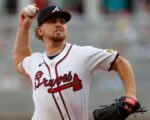
12) Raisel Iglesias – Atlanta Braves
2026 Outlook: Iglesias struggled out of the gate in 2025, recording a 5.91 ERA over the first two months, and was removed from the closer role for a short stint before turning things around. He went on to post a 1.96 ERA while converting 21 saves from June onward, finishing with 29 of the team’s 34. He was terrific down the stretch, allowing one run over his final 28 outings and leading the league in saves over the final two months. There’s been a gradual decline in his fastball velocity, resulting in fewer whiffs and knocking Iglesias from elite closer status to simply very good. And despite the team’s addition of Robert Suarez, Iglesias will remain the team’s go-to option in the ninth inning. Unless we see the velocity rebound, unlikely at this stage, the saves may come with a few more bumps than we’re accustomed to for the now mid-tier closer.
2026 projection: (Mixed $9): 64.0 IP, 3 W, 31 SV, 3 H, 3.66 ERA, 1.12 WHIP, 67 K
13) Daniel Palencia – Chicago Cubs
2026 Outlook: Palencia enjoyed a breakout season with the Cubs, posting a 2.91 ERA, 1.14 WHIP, and 61 strikeouts over 52 2/3 innings. He quickly ascended the late-inning hierarchy, taking over the closer role in late May and finishing with 22 saves. Palencia’s season hit a snag when he was placed on the injured list in September for a right shoulder strain following a five-run outing. He returned to make eight more appearances, including eight in the postseason, but did not record another save. The fact that he saw no decline in his velocity, sitting at 99 mph, was a good sign upon his return from the injury. Palencia is expected to enter the 2026 season fully healthy and in line to assume closing duties for the Cubs with no apparent threats to challenge for the role. While not without risk, he’s an ideal RP2 with terrific upside in fantasy drafts.
Advertisement
2026 projection: (Mixed $12): 60.7 IP, 4 W, 33 SV, 3 H, 3.26 ERA, 1.15 WHIP, 67 K
14) Trevor Megill – Milwaukee Brewers
2026 Outlook: Megill was having an outstanding season, converting 30 saves with a 2.49 ERA, 1.13 WHIP, and 60 strikeouts over 47 innings before landing on the injured list in late August with a right elbow flexor strain. He returned for the postseason, but the team opted to keep Abner Uribe in the closer role as he filled in for Megill over the final month and picked up the team’s only postseason save. Megill maintains the skills to close, with a solid 22.4% K-BB rate and supporting ERA indicators. He goes into 2026 as the favorite to assume the role, having converted 30 last season and 51 for the team over the last two years. But the late-season injury and playoff usage cast far too much doubt to call this a safe pick in drafts until there’s more clarity this spring.
2026 projection: (Mixed $8): 55.0 IP, 3 W, 23 SV, 5 H, 3.27 ERA, 1.16 WHIP, 66 K
Advertisement
15) Pete Fairbanks – Miami Marlins
2026 Outlook: Fairbanks had an excellent year with the Rays as he was able to avoid the injured list for the first time in a full season. He converted a career-high 27 saves with a 2.83 ERA, 1.04 WHIP, and 59 strikeouts over 60 1/3 innings. For the second straight season, his strikeout rate has hovered around 24%, likely a result of his fastball dropping from 99 mph in 2022-2023 to 97 mph since 2024. When he sat at 99 mph, his strikeout rate approached 40%. It’s likely the trade-off for him staying healthy. Fairbanks is set to close for the Marlins after inking a one-year, $13 million contract with Miami. A safe bet for saves, he still comes with an elevated injury risk and the possibility he’s on the trade market if the Marlins find themselves out of contention at the deadline.
2026 projection: (Mixed $7): 55.3 IP, 3 W, 28 SV, 2 H, 3.90 ERA, 1.28 WHIP, 55 K
16) Emilio Pagan – Cincinnati Reds
2026 Outlook: Five years removed from his best season and coming off a 4.50 ERA in 2024, Pagán’s resurgence came as a bit of a surprise. He emerged early on as the go-to option in the ninth, securing a hold of the closer role and ending the season with 32 saves, good for fifth in baseball, to go with an excellent 2.88 ERA, 0.92 WHIP, and 81 strikeouts over 68 2/3 innings. He’s maintained a solid 14% swinging-strike rate over the last two seasons and continues to limit free passes, but home runs remain an issue as he’s prone to the longball. Pagán is set to return as the Reds’ closer after re-signing with Cincinnati on a two-year, $20 million deal. Some regression to his .200 BABIP will make it difficult to repeat the sub-3.00 ERA given his home run rate, but he’s a solid option as a second closer for saves.
Advertisement
2026 projection: (Mixed $8): 64.3 IP, 4 W, 26 SV, 8 H, 3.92 ERA, 1.15 WHIP, 65 K
17) Carlos Estevez – Kansas City Royals
2026 Outlook: Estévez was able to avoid regression despite diminishing underlying skills, recording a 2.45 ERA and a 1.06 WHIP while leading MLB in saves with 42 over 66 innings. Those numbers were already going to be hard to repeat given his gradual decline in fastball velocity, bloated ERA indicators, and an 11.9% K-BB rate that was one of the worst among closers. They’re going to be even harder to replicate after the Royals adjusted the dimensions to Kauffman Stadium, bringing the fences in roughly 10 feet across the board and making the walls slightly shorter. Estévez will need to see a rebound in his velocity and bat-missing ability after his swinging-strike rate dropped from 12.5% to 8.2% if he’s to fend off serious regression. Still, he enters the season as the unquestioned closer. Draft for saves, but don’t expect the prettiest ratios.
2026 projection: (Mixed $5): 62.0 IP, 3 W, 28 SV, 3 H, 4.06 ERA, 1.26 WHIP, 56 K
Advertisement
18) Kenley Jansen – Detroit Tigers
2026 Outlook: Jansen continues to get the job done as he converted 29 saves for the Angels last season to go with a stellar 2.59 ERA and 0.95 WHIP with 57 strikeouts over 59 innings. However, the 38-year-old right-hander did show some chinks in the armor, as he saw a decline in some underlying skills, including a career-low 24.4% strikeout rate. And he was incredibly fortunate on balls put in play, with a .195 BABIP. But while his ERA indicators scream regression, including a 4.60 xFIP and 3.94 SIERA, Jansen has significantly outperformed those metrics nearly every season since 2020. The savvy 16-year veteran joins a Tigers team that has employed a committee approach over the last several seasons. And while he may not get every save opportunity, manager A.J. Hinch has confirmed that Jansen will open the season as the favorite to close out games as he approaches the 500-save milestone.
2026 projection: (Mixed $7): 55.7 IP, 3 W, 25 SV, 6 H, 3.72 ERA, 1.17 WHIP, 58 K
19) Griffin Jax – Tampa Bay Rays
2026 Outlook: Jax emerged as one of baseball’s top relievers in 2024 but, at least on the surface, wasn’t able to replicate his success. He recorded a 4.23 ERA and a 1.29 WHIP with 28 holds across 66 innings with the Twins and Rays. Despite the uninspiring ratios, Jax sustained outstanding underlying skills. With a swinging-strike rate of 18% over the last two seasons, he’s established himself as one of the top bat-missers among relievers, ending the season with a career-high 99 strikeouts. The struggles with run prevention can mostly be attributed to a bloated hit rate, with a .368 BABIP. It was on his fastball in particular that hitters did their damage. With a 28.1% K-BB rate that was top-ten in baseball among qualified relievers, there’s a good chance we see Jax bounce back. Just don’t expect a full share of saves as he’s set to work in a committee in Tampa Bay.
Advertisement
2026 projection: (Mixed $12): 66.3 IP, 4 W, 28 SV, 5 H, 3.12 ERA, 1.06 WHIP, 82 K
20 – tied) Abner Uribe – Milwaukee Brewers
2026 Outlook: Uribe burst onto the scene after a tumultuous 2024 campaign in which he saw a suspension and demotion before a knee injury ended his season. He posted an incredible 1.67 ERA, 1.04 WHIP, and 90 strikeouts over 75 1/3 innings while recording 37 holds and stepping in for seven saves, including the team’s only save in the postseason. He displayed a vastly improved walk rate, generated more whiffs, and kept the ball on the ground, exhibiting an excellent all-around skillset. Despite ending the season as the team’s closer, Trevor Megill remains the favorite to assume ninth-inning duties going into the 2026 season. Yet, there’s been speculation surrounding Megill as a potential trade candidate. It’ll be a situation worth monitoring closely this spring. Should Uribe be given the chance to run with the closer role, he has the potential to establish himself as one of the best.
2026 projection: (Mixed $6): 64.3 IP, 4 W, 16 SV, 18 H, 2.94 ERA, 1.18 WHIP, 80 K
Advertisement
20 – tied ) Dennis Santana – Pittsburgh Pirates
2026 Outlook: Santana is set to enter the season as Pittsburgh’s primary closer after recording a 2.18 ERA, 0.87 WHIP, and 60 strikeouts over 70 1/3 innings. He converted 16 saves, taking over the ninth-inning role after the Pirates traded David Bednar at the deadline. He has limited closing experience, with 20 career saves, and doesn’t possess prototypical closer stuff, posting just a 22.2% strikeout rate. But the team hasn’t brought anyone in who poses as an immediate threat to challenge him for the closer role. Leaning more on his slider, Santana induced a career-high 13.1% swinging-strike rate, which could potentially translate to more strikeouts. He also displayed improved control, with a career-low 6.3% walk rate. He’ll have to generate more strikeouts and continue to limit walks to limit regression, but Santana makes for a solid fallback option for saves in fantasy drafts.
2026 projection: (Mixed $4): 63.0 IP, 3 W, 23 SV, 6 H, 3.86 ERA, 1.22 WHIP, 61 K
22) Ryan Walker – San Francisco Giants
2026 Outlook: Walker followed an outstanding 2024 breakout campaign with a turbulent season, posting a 4.11 ERA, 1.27 WHIP, and 60 strikeouts over 61 1/3 innings. He entered the season as the closer but was relegated to middle relief by May after a poor start. Walker got another opportunity down the stretch after the team traded Camilo Doval and Randy Rodríguez was lost to injury, finishing with 17 saves. He was much more hittable, not inducing the same amount of swing-and-miss on his slider, resulting in a sharp reduction in his strikeout rate from 32.1% in 2024 to 22.6%. Ideally, the Giants would like Walker to make the necessary adjustments to return to form and settle back into the team’s closer role, but the team has indicated that there could be competition for the job this spring.
Advertisement
2026 projection: (Mixed $3): 65.0 IP, 4 W, 13 SV, 13 H, 3.60 ERA, 1.20 WHIP, 68 K
23) Riley O’Brien – St. Louis Cardinals
2026 Outlook: O’Brien started the season in Triple-A after missing most of 2024 with a forearm flexor strain. He flashed some strikeout upside in the minors with a 37.2% strikeout rate over 19 1/3 innings. He was recalled by the Cardinals and spent most of the year in St. Louis for a career-high 48 innings. O’Brien didn’t generate nearly as many strikeouts, with a 22.6% strikeout rate, but he still recorded an excellent 2.06 ERA and 1.15 WHIP while working his way into late-season ninth-inning work with six saves. A high ground ball rate helped him suppress runs, but he’s going to have to do more than that to fend off regression as an 11.6% K-BB rate likely won’t cut it if he’s to remain in the mix for saves all season. O’Brien is a late dart throw for saves with limited upside in deeper leagues.
2026 projection: (Mixed $2): 61.0 IP, 3 W, 21 SV, 6 H, 3.84 ERA, 1.33 WHIP, 63 K
Advertisement
24) Seranthony Dominguez – Chicago White Sox
2026 Outlook: Domínguez had a solid campaign across 62 2/3 innings, starting the season with the Orioles and finishing out with the Blue Jays after the trade deadline. He posted a 3.16 ERA and 1.28 WHIP with 79 strikeouts for an excellent 30.3% strikeout rate, his best since his debut season in 2018. While he impressed with improved strikeout ability, the tradeoff was a career-high 13.8% walk rate, one of the worst across all qualified relievers. Combined, a 16.5% K-BB rate is more middling than you’d like to see for a closer. Still, the White Sox showed their confidence in Domínguez, giving him a two-year, $20 million contract. Bringing 40 career saves, he’s expected to enter the season as the team’s closer. And he’s likely one of the last relievers in fantasy drafts that you can say that about, making him a fallback option for saves.
2026 projection: (Mixed $5): 61.7 IP, 3 W, 23 SV, 7 H, 3.79 ERA, 1.25 WHIP, 69 K
25) Bryan Abreu – Houston Astros
2026 Outlook: Abreu was one of baseball’s best relievers and top setup men once again, recording at least 24 holds and 100-plus strikeouts for the third straight season. He posted a 2.28 ERA, 1.15 WHIP, and 105 strikeouts over 71 innings, even stepping in for seven saves in Josh Hader’s absence late in the year. Despite leaning more on his fastball, Abreu generated a career-high 17.8% swinging-strike rate. And he’s the only reliever in baseball with at least 70 innings pitched in each of the last three seasons. Already one of the top closer handcuffs in baseball, Abreu appears poised to step into the ninth-inning role in the event Hader is sidelined once again. Should he find himself closing games, he can be a top-five option for saves while being one of the top strikeout leaders at the position.
Advertisement
2026 projection: (Mixed $1): 67.7 IP, 5 W, 4 SV, 31 H, 2.93 ERA, 1.15 WHIP, 92 K
28) Kirby Yates – Los Angeles Angels
2026 Outlook: Yates had a disappointing season with the Dodgers after an impressive career revival with the Rangers in 2024. He started the season just fine, posting a 2.95 ERA with 31 strikeouts over his first 18 1/3 innings for an outstanding 41.3% strikeout rate and 34.7% K-BB rate. Hampered by multiple hamstring and back injuries, he went on to record an inflated 5.96 ERA with just a 21.4% strikeout rate over the following 22 2/3 innings. On the bright side, his swinging-strike rate never really deteriorated as he generated a strong 16.5% mark on the year. But back and soft-tissue problems could be a common occurrence at age 39. Still, the Angels are taking a chance on the veteran right-hander, giving him a one-year, $5 million deal where he’s expected to compete for save chances, making Yates a volatile option worth a dart throw late in drafts.
2026 projection: (Mixed $4): 52.3 IP, 3 W, 22 SV, 5 H, 3.96 ERA, 1.24 WHIP, 66 K