

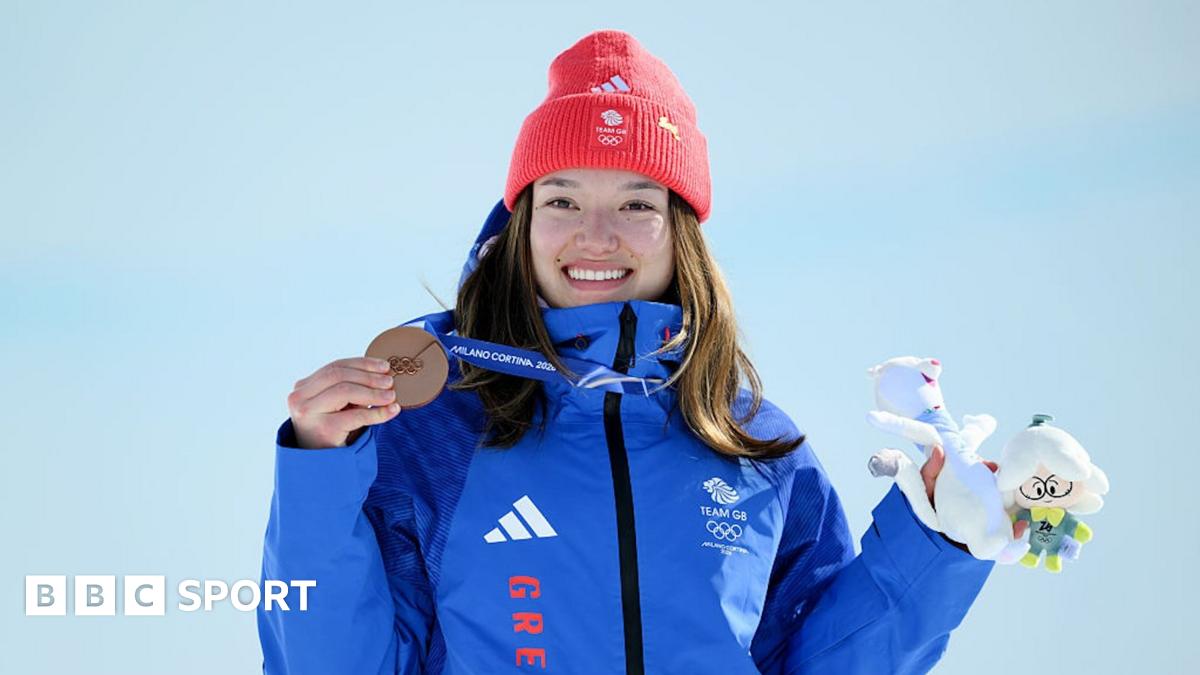
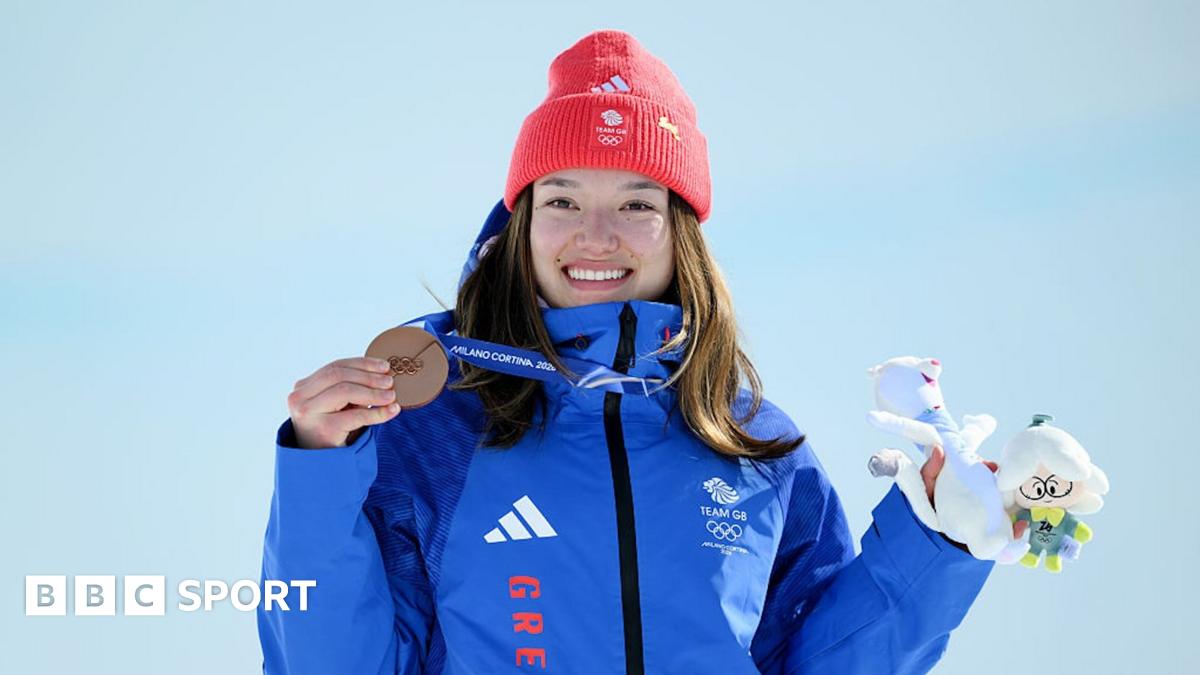
Freestyle skier Zoe Atkin won bronze in the women’s halfpipe to secure Great Britain’s fifth medal at the 2026 Winter Olympics, equalling the team’s record-best haul.
The 23-year-old had already secured a medal when she dropped into the pipe for her final run and, with the pressure off, improved her score to 92.50 – just half a point shy of silver medal position.
China’s global superstar Eileen Gu won gold, her first of these Games after two silvers, with 94.75, while compatriot Li Fanghui took silver.
In winning bronze, Atkin matches the achievement of her sister Izzy, who won Team GB’s first Olympic medal on skis with slopestyle bronze in Pyeongchang eight years ago.
With five medals secured – three golds, one silver and now a bronze – Team GB have matched the record hauls they achieved in Sochi in 2014 and the 2018 Games in South Korea.
But this was the team’s most successful Winter Olympics the moment Charlotte Bankes and Huw Nightingale secured the second of those golds in the mixed team snowboard cross exactly a week ago.
Never before had Great Britain won more than one gold at a single Winter Games.
Atkin came into her second Olympics fresh from winning X Games gold and as the reigning world champion, eager to improve on the ninth-place finish she achieved on her debut in Beijing four years ago.
She had qualified top of the standings for the final, which was postponed to Sunday morning after heavy snowfall in Livigno the previous day.
There she remained after the first run, with a score of 90.50, after Gu – the defending champion – had fallen on her opening trick.
On the second run, the roles reversed. Gu vastly improved with a 94.00, as did Li with 91.50, only for Atkin to fall on her effort.
Gu, the most decorated female Olympic freestyle skier in history, boosted her score further on her third and final run, leaving Atkin knowing she would have to be perfect to challenge for gold.
But with the medal already in the bag, Atkin was smiling at the top of the pipe as she dropped in for one last time, enjoying a pressure-free run and seemingly unbothered that the two points she gained were not enough for a higher step on the podium.
How studying at Stanford helped Atkin win bronze
The top of the icy Winter Olympics halfpipe is a world away from the Californian climes of Stanford University.
And yet it is where Atkin’s two worlds collide.
As an Olympic medal-winning skier – and a student at one of the United States’ most prestigious colleges.
Atkin, who was born and raised in the US to a Malaysian mother and English father, studies symbolic systems – «a mix of cognitive science, studying the brain, how it works and the mechanisms of that, combined with computer science and studying those machines,» as she told BBC Sport before the Games.
Olympic halfpipes are 6.7m high, with Atkin achieving an amplitude of more than 5m during her final.
That means, should something go wrong mid-air, athletes have a near 12m drop on to pure ice, a risk Atkin had previously struggled to cope with.
«I have learned so much that has helped me so much being an athlete in an action sport. The tricks and manoeuvres that we’re doing inherently have a lot of risk to them,» she said.
«I’ve struggled with fear a lot in the past, especially when I was younger. Learning about the mechanisms of the brain has really helped me apply those learnings and new mindsets and be able to test those theories, in practice, in my sport.
«It’s in those really hard moments that you show yourself what is possible and that is when you really push your limits.
«I’ve been able to find my power in that.»
-
Day-by-day guide to the Winter Olympics
-
31 minutes ago
-
-
Full schedule including times of medal events
-
Winter Olympics 2026 medal table
Winter Olympics 2026
6-22 February
Milan-Cortina
Watch two live streams and highlights on BBC iPlayer (UK only), updates on BBC Radio 5 Live and live text commentary and video highlights on the BBC Sport website and app.
Related topics
- Winter Sports
- Winter Olympics
- Freestyle Skiing