
-
-
5 Comments
Have Formula 1’s new rules this year damaged its status as the ultimate challenge for a racing driver?
Listen to the sport’s top drivers, and it would be easy to get that impression.
«Not Formula 1,» says Max Verstappen of the need to manage energy in the new cars. «Ridiculously complex,» says Lewis Hamilton. «The chef could drive the car at that speed,» says Fernando Alonso. «Not the purest form of driving,» says Lando Norris.
When the sport’s four active world champions make comments like that, it would be foolish not to listen.
But before jumping to a conclusion that F1 has been ruined by what amounts to the biggest rule change in the sport’s history, it’s important to establish a frame of reference.
What, in essence, is the job of a racing driver? It is to get a car around a race track in the shortest possible time.
In its purest form, this means braking as late as possible for a corner, driving around it at the highest achievable speed, exiting it as fast as one can and reaching the highest speed on the straight before doing the same again, lap after lap.
But that’s not what a racing driver does all the time. It can’t be. The way they drive on a qualifying lap, for example, is not the same as over a 200-mile grand prix distance.
Tyres and fuel need to be managed, there might be problems with the car to take into account, and so on. That’s still getting the car around the track as fast as possible, but it’s doing so within the constraints presented at the time. Flat out in motorsport is only sometimes.
So when Verstappen, Alonso and co talk about the degree of energy management required with this year’s new hybrid engines, are they saying that they are no longer ever driving on the limit of grip in the corners?
At last week’s pre-season test in Bahrain, I asked that question to all of the above drivers, as well as Mercedes’ George Russell and Kimi Antonelli, and Haas’ Oliver Bearman. They all said they were still on the limit of the grip the vast majority of the time, that skill still mattered, that a faster driver would still beat a slower one.
The new cars have less downforce than last year, so they have less grip, but the drivers are still on the limit of that grip in the corners.
Bearman said: «Some corners on this track, which were last year limitations or places that you have to be aware of, are not really corners any more, they’re more power-limited. Like Turn 12 and Turn Seven.
«So you do change the way that you approach those corners. And where last year Turn 12 you were 40km/h faster this year, it’s not really a corner any more. And that is a bit strange.
«But for the rest, you’re still pushing to the limit even if the limit is a bit lower at the moment. But it’s not feeling out of this world. Once we get used to the differences in some corners, you just adapt your driving style. And then it feels like normal.»
The balance of going flat-out and ‘harvesting’
McLaren team principal Andrea Stella has an intimate knowledge of what it takes to be a top driver, having worked as a race engineer with Michael Schumacher, Kimi Raikkonen and Alonso. He is also interested in this topic for the good of the sport.
He says: «What we’ve seen in Bahrain definitely confirms that it’s the ultimate challenge.
«Probably this is because Bahrain is a harvest-rich circuit, so you drive in a very normal way. And if anything with these regulations the cars slide quite a lot more and the role of the driver if anything is even more involved in extracting the most out of the car.
«Barcelona was a slightly different situation because, being a relatively harvest-poor circuit, there were some special manoeuvres that needed to be made, like not being flat-out in high-speed (corners) in order to balance the level of harvesting and produce the fastest lap time. That meant that in Barcelona not necessarily you could be at the fastest speed in high-speed corners.»
Stella’s remarks refer to the drivers’ need to perform what McLaren’s Oscar Piastri has described as «counter-intuitive» driving techniques.
The combination of a near 50-50 split between the internal combustion engine (ICE) and electrical components, three times the amount of electrical power compared with last year’s engines and a battery about the same size means the new engines are energy starved.
With the battery emptying itself within about 11 seconds of full power, it is emptying and being recharged constantly around a lap. The engineers have to work out how best to deploy whatever energy they can recover through a lap for the optimum performance.
This has led to unnatural techniques, such as not accelerating at full speed out of a corner before starting a qualifying lap until some way down the straight, choosing not to deploy energy for maximum speed in some high-speed corners, even not deploying on the straight at the end of a qualifying lap because the energy was better used exiting a corner elsewhere on the lap.
Other energy-recovery tasks include:
-
Lift and coast, a feature for many years, where drivers lift off for a short time before applying the brakes for a corner
-
Using a lower gear than would be optimum for performance in corners so the turbo can be kept spooling fast to recharge the battery
-
‘Super clip’, where the electric motor is run against the engine at full speed on the straights to recovery energy
But how much of a difference is this really making?
BBC Sport has seen a telemetry data overlay of a quick lap from Bahrain with last year’s cars compared with one from this year.
There are differences. The slow corners are now taken slightly faster, the quick ones slightly slower. Acceleration is initially much faster, but so is the rate at which it tails off later on the straights. The lap time is a couple of seconds slower overall – as is always intended in the case of an F1 rules reset. But fundamentally, the traces look very similar.
And on track? Well, they still look like F1 cars, is the bottom line. It takes a very well trained eye to notice the differences.
Why overtaking is expected to be difficult
Nevertheless, there is an ongoing debate in F1 as to whether the new cars have moved the sport too far away from the purity of the driving challenge, and some think changes could be made to reduce the levels of energy management.
At the moment, the rate of energy recovery with the ‘super clip’ – frankly, jargon that would be better kept away from public consumption because of the potential for confusion – can be done at a maximum of 250kw.
But the engines are capable of recovering energy at 350kw, and do so when a driver has lifted off the throttle. So why not let them do that when flat out?
Another proposal is to reduce the output of the electrical part of the engine, currently limited to 350kw (470bhp), to about 300kw (402bhp) or even 250kw (335bhp). The idea being to cut overall power but allow it to be applied for longer, to make driving feel more natural.
Going even further, some would wish to increase the amount of fuel the engine is allowed to use, and rebalance the ratio between the ICE and electrical, perhaps to 65:35 or 70:30.
The opposing view is that these last two would require wholesale changes to the engine design and other aspects of the car such as gear ratios. Opponents also argue it would not have the effect required.
A related problem is the new ‘overtake’ button. This replaces the drag reduction system (DRS) overtaking aid, which no longer exists because both front and rear wings open on the straights, part of a series of tweaks made as a consequence of the new engine formula.
‘Overtake’ mode provides the drivers with electrical energy for longer. It does not create more power or, as DRS used to, more speed. As a result, overtaking is expected to be difficult.
Herein lies another argument for reducing the electrical output to 300kw – then, the remaining 50kw could be used for overtake mode.
An added complication is that the circuits all require different levels of energy management.
In Bahrain, the above techniques were not really needed because there are a lot of braking phases into slow corners to recover energy in the standard way.
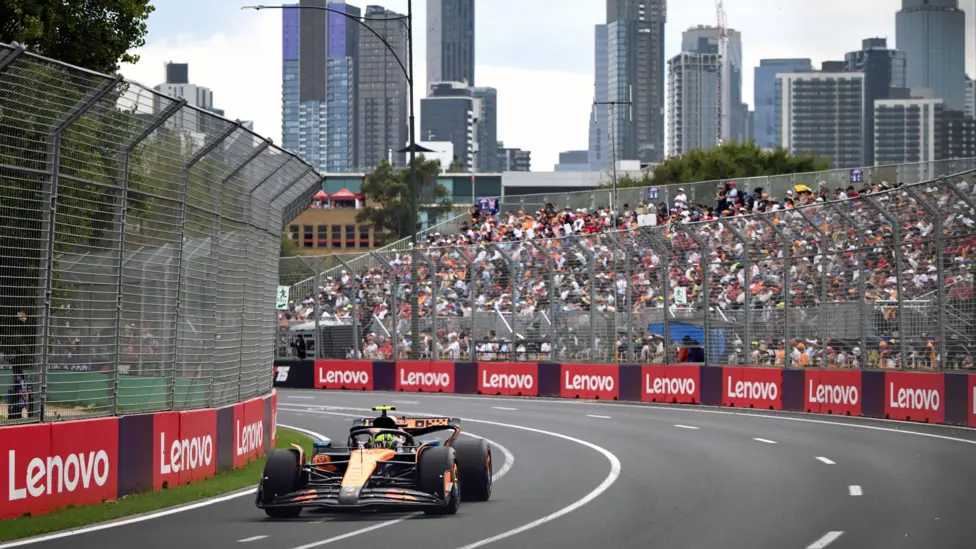
But Albert Park, which hosts the season-opening Australian Grand Prix on 8 March, is an energy-starved circuit, and lift and coast and super clip are expected to be needed extensively, even in qualifying.
Melbourne joins Saudi Arabia, Austria, Silverstone, Monza, Azerbaijan and Las Vegas among the worst circuits for energy – tracks with long straights but not much facility to recover in braking zones.
The teams are in ongoing discussions about whether to take action, and if so, what form it should take, with governing body the FIA and F1.
Stella says: «Definitely there could still be cases in which the driver needs to approach driving in what is not a common way – (where) we just drive as flat as possible, brake as late as possible, go as fast as possible in every corner.
«When it comes to improving the balance between the regulations in their current format, and some other driving challenges, there is time to fix this.
«For instance, there is a way of changing the way in which we deploy the electrical engine such that this requirement to do these special manoeuvres is reduced.
«So there are things that can be done in the future, but I think we should monitor a little bit more in some other circuits (before deciding what to do).»
Related topics
- Formula 1
-
Why has it gone so wrong for Aston Martin?
-
2 days ago
-
-
Who are the winners and losers from F1 pre-season testing?
-
5 days ago
-
-
Andrew Benson Q&A: Send us your questions
-
1 day ago

-
-
F1: Chequered Flag