

-
-
10 Comments
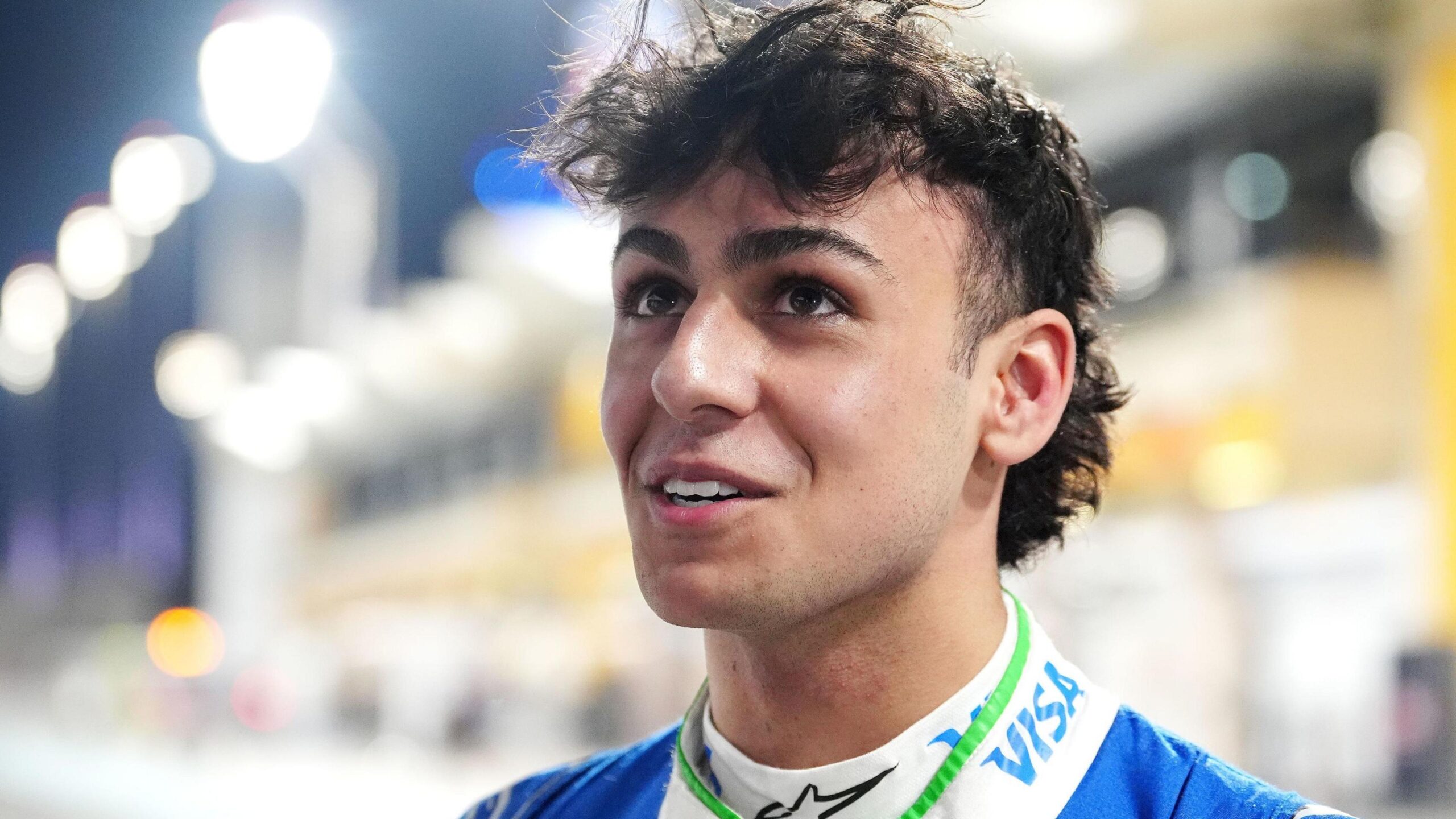
Arvid Lindblad’s eyes light up. The 18-year-old who is about to become Britain’s youngest ever Formula 1 driver is sitting on a beach in Bahrain, a Gulf mist obscuring the still-rising sun, and he’s pondering a question.
He’s been polite but wary so far. A five-minute drive from the circuit where he and his Racing Bulls team are completing their preparations for his grand prix debut in Australia at the beginning of March. On the cusp of achieving his lifetime’s dream, understandably he wants to make sure he does not say anything he might regret.
But when he’s asked what has been the best thing that’s happened to him since he became an F1 driver, the joy inside him bubbles to the surface, and he can’t resist a little smile.
«Since becoming a Formula 1 driver… the best thing was just becoming a Formula 1 driver,» he says.
He learned about Red Bull’s decision to promote him to their second team at last year’s Qatar Grand Prix, where he was competing in the penultimate round of the Formula 2 championship.
The news was broken by Red Bull’s former motorsport adviser Helmut Marko, the veteran former F1 driver who had taken Lindblad into the company’s driver programme at the age of 13 as a promising go-karter.
«This is something I’ve been doing with my dad,» Lindblad says. «I got the news in Qatar when I was with him, so obviously that was a very special moment to share together.»
Does he still have to pinch himself to make sure it’s real? Lindblad pauses. «A little bit,» he says.
Shaped by UK, Indian and Swedish heritage
Lindblad’s graduation to F1 this year is breaking new ground for the sport.
He is one of five British F1 drivers on the grid this year – six if you count Alex Albon, who was born and raised in the UK, but races under the Thai flag. He’s also the first Briton with Indian heritage to race at the highest level of the sport.
His father, Stefan, is Swedish. His mother, Anita, is of Indian descent. The partition of India in 1947 played a significant role in the family’s history.
«My Nani, my grandmother, is Sikh, grandfather’s Hindu,» Lindblad says. «And when they were five, they were involved in the partition.
«They were in the part of Punjab that is now Pakistan, and they had to leave. They came from quite well-off backgrounds, but then they lost everything. So then they had to work very hard their whole life to recreate a life for themselves. Then they moved to the UK in their late 20s, early 30s, as doctors.»
His family background is, he acknowledges, «quite a rare combination, but I’m very proud of my heritage. All three parts have really shaped me to who I am today».
He adds: «I’ve been very exposed to all three. Even though my grandparents moved to the UK when they had my mum, they’re still very traditional Indians. I’ve been exposed to a lot of their cultures and rituals, the food, the prayer, all that sort of stuff, from an early age, as well as the Swedish. It’s really shaped who I am today.»

Language skills have not passed down the generations as effectively as culture, though.
«I’m not the best at languages, to be honest. I can speak a little bit of Swedish and a few words of Hindi, but it’s not great,» Lindblad says.
«I couldn’t do an interview in another language, so it’s something I’m still working towards. I think it is important and it’s also an element of respect, but I’ve got some work to do.»
The interest in motorsport came from his father’s side of the family.
«My grandfather is a massive motorsports fan,» Lindblad says. «He’ll watch anything with wheels and an engine. He did a little bit of motocross with my dad when he was younger. Unfortunately, they couldn’t do it for very long, but he passed that passion down to my dad, who passed it on to me.
«When I was three, my dad got me a motocross bike. To be honest, it didn’t last very long. It was a bit too much for my mum to sit a little three-year-old on a motocross bike. So that died out quite quickly.
«But then when I was five I went karting for the first time and loved it from the beginning.
«But I’d say a big turning point for me that I remember very well was when I was about four. My dad was sitting on the sofa and had the F1 on and I came and sat down next to him and was watching the race and asking him, ‘Is it possible to be there? Could I? How does it work?’
«That was really the moment when I saw the cars and wanted to be there one day and that fuelled the start of the journey.»
He says he has been fixated on this moment from a very early age.
«From the beginning I wanted to be in F1 and I believed for some reason that I could,» he says. «I don’t know if that was false hope or what, but from five I believed I could be in F1, and that was always what I was working towards.»

Lindblad was born and grew up in well-to-do Virginia Water in Surrey, and is the first to acknowledge that he has been helped on his way by the relative comfort of his background.
«I’m very fortunate to be able to do racing, because as everyone knows it’s not the most accessible sport to everyone,» he says.
«I’ve already touched on a bit my mum’s side, that they were very hard-working and they had to really fight for what they had.
«My grandmother retired as a doctor at 82, and my mum is very similar. Well, she’s not 82, but she has that very similar work ethic. And my dad even more so.
«He came from a small village in Sweden, where sometimes my grandparents struggled to put three meals on the table.
«He had his first job from when he was 11, trying to just do anything he could to get any pocket money. He funded himself through university and he’s worked really hard his whole life, and it’s a big reason why I’m able to do this and be here today.
«So I’m extremely thankful and grateful for that. But even more so I think I’m very lucky to come from a family where hard work, humility and all of those values are very important. That’s really something I try to show and act of as well.»
His progression to F1 has been rapid. After seven years in karts, winning a number of international championships, he made his car-racing debut in 2022 aged only 15, and has been fast-tracked by Marko through F4, F3 and F2 year by year.

We’re talking at the plush hotel Racing Bulls have picked as their base for the two pre-season tests in Bahrain, which followed a ‘shakedown’ in Spain. It’s not long past 8am, and his next appointment is an engineering meeting, before going out on track later in the day.
Asked if he feels ready for the big time in F1, he says: «Yeah, I think so. Obviously, it’s a big step from F2, especially this year. There’s regulation changes and everything is very different.
«But I’ve been working really hard with the team on the sim (simulator) at the factory, obviously also trying to utilise these three tests that we have.
«That’s a big benefit for me this year. Normally, there’s only one, whereas this year there’s three. So that really helps me to get up to speed. I’m really trying to utilise these tests, and I’m looking forward to getting on track in Melbourne.»
Racing Bulls team principal Alan Permane, who has worked with a multitude of top drivers, including Michael Schumacher and Fernando Alonso, has been full of praise so far.
«He’s done a fantastic job,» Permane says. «People often ask me, ‘What do you look for? What do you need in a young driver?’ And of course, the first thing you need is for them to be quick. We’re very comfortable with that, we know he’s got the speed.
«But also on top of that, he’s bringing lots of inquisitiveness, he’s asking many questions, his debriefs are great, he’s doing everything we ask of him at the moment.»
F1 is a brutal business, with little sentiment. Drivers either achieve or they’re out. And nowhere is more ruthless than Red Bull.
You might expect Lindblad to be feeling a little pressure mixed in with the obvious excitement. But he says not.
«I wouldn’t really say pressure,» he says. «If I’m being honest, this is what I’ve worked towards my whole life.
«So I’m excited to be here, and all I’m really thinking about at the moment is trying to work with the team, trying to understand the cars to get the best performance I can, trying to extract the most out of the package from the beginning.»
Related topics
- Formula 1
-
Why has it gone so wrong for Aston Martin?
-
1 day ago
-
-
Who are the winners and losers from F1 pre-season testing?
-
4 days ago
-
-
Andrew Benson Q&A: Send us your questions
-
23 hours ago
-
-
F1: Chequered Flag