



The Football Interview is a new series in which the biggest names in sport and entertainment join host Kelly Somers for bold and in-depth conversations about the nation’s favourite sport.
We’ll explore mindset and motivation, and talk about defining moments, career highs and personal reflections. The Football Interview brings you the person behind the player.
Interviews will drop on Saturdays across BBC iPlayer, BBC Sounds and the BBC Sport website. This week’s interview will be broadcast on BBC One from 23:55 GMT on Saturday, 7 February (and at 00:55 Sunday in Scotland).
———————————————————
Granit Xhaka has played a starring role for Sunderland as they have exceeded expectations on their return to the Premier League after an eight-year absence.
Switzerland midfielder Xhaka is back in England’s top division after spending seven years at Arsenal from 2016-2023.
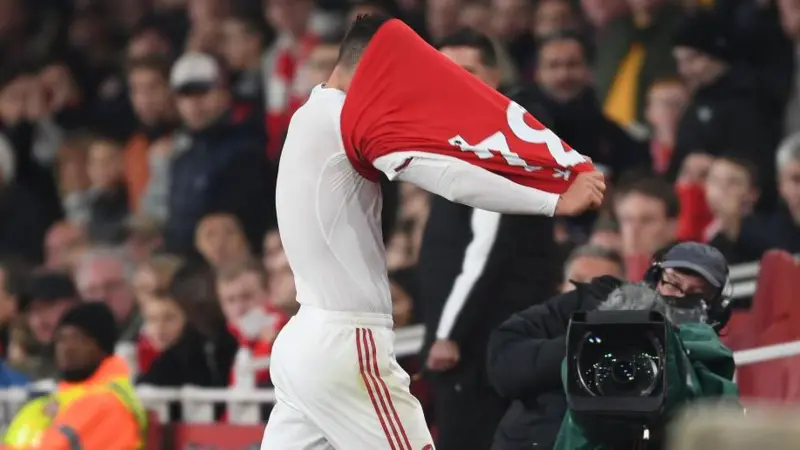
Xhaka, 33, helped the Gunners win the FA Cup twice and reach the Europa League final but had an up-and-down time in north London, including a major fallout with supporters and being stripped of the club captaincy.
After leaving Arsenal, he made an immediate impact at Bayer Leverkusen – helping them win the double in Germany.
But the lure of a return to the Premier League proved too much as Xhaka, who started his career at Basel and also played for Borussia Monchengladbach.
In an extended interview with Kelly Somers, Xhaka spoke about a range of things, including why he signed for Sunderland, and his clash with Arsenal fans.
Xhaka will not be part of the Black Cats team that plays at the Emirates on Saturday because of injury.
That has denied him the chance of what he said would be a «very emotional» return to his «second home after Sunderland».
And Xhaka said he had «a lot of respect» for Gunners manager Mikel Arteta.
«He was the guy who kept me in the football club,» he said. «Everyone knows it and I will never forget what he did for me.»
Kelly Somers: What’s been the toughest point in your career?
Granit Xhaka: I have two tough moments. The first one was when I moved for the first time away from my family at nearly 19 to Germany. It was very difficult for me. Everyone knows how close I am to my family and to be away from them was hard. I didn’t get the minutes I wanted [on the pitch] and I wanted to leave in January after six months, but I had my dad behind me. He said: ‘If you walk now, you will always walk away, so head down and just work.’ I did, and everything changed.
The second part is not a big secret. It was 2019 when I had this… I call it a misunderstanding… with the fans of Arsenal. Two moments where I think that I became stronger and better because it’s part of a process. It’s part of writing the whole history. On one side, very bad. On one side, I was lucky to have it.
Kelly: Now you’re back in the Premier League, have you had an opportunity to reflect on your whole period at Arsenal? Because you had some incredible highs as well as some really difficult moments…
Granit: In general, I think people just think about this moment in 2019. But I came in 2016, so to be part of a football club for seven years makes me proud… it’s not easy to be on this level for seven years. And, of course, when I left Arsenal it was a hard decision for myself and for my family because we were happy there. But I got another offer on the table where I was thinking more far [ahead] than in the moment. To be honest, I didn’t expect to be back in the Premier League after two years again. This was not the plan for myself, or for our family.
Kelly: So you never wanted to come back?
Granit: It’s not that I didn’t want to, but it wasn’t planned. When I moved from Arsenal, I signed a five-year contract at Leverkusen. So everything was planned around what happens after five years. But I always say in football, you never know where you are tomorrow.
Kelly: Why did you come back then?
Granit: Even the people closest to me were saying: ‘Why are you going back to the Premier League to join Sunderland?’ I came back because I love the challenge and I had the feeling I need a new challenge. After two years in Germany, where in the first year we won nearly everything… unbeaten in the Bundesliga, won the cup, lost the final of Europa League, which was very painful. I just had the feeling with the owner when I spoke with them – with the club, with the coach – this is the right club for me, because the people are very humble. It’s a small city like where I grew up. I just wanted to come back in a reality which I believe is the right direction for myself, for my family. I’m just happy that everything at the moment is going how I wanted it to.
Kelly: You must have expected it to go well because otherwise you wouldn’t have come here. But has it exceeded your expectations?
Granit: The first thing I said to the club was: ‘I’m not coming here to play in the Premier League for one year and to go down, because I’m leaving a Champions League club. I’m coming here to to push this project.’
Kelly: I find it fascinating, because you must have had other offers to come back to the Premier League…
Granit: It was a busy summer to be honest! I’m 33, I spoke with my brother and I said: ‘I never have had so many offers!’ The summer was very busy because every day someone else came. But I decided for myself – after 20 minutes on the call with the owner – I wanted to go to Sunderland. I was so sure.
Kelly: What was a young Granit Xhaka like?
Granit: I was not so easy to handle…
Kelly: Why doesn’t that surprise me?!
Granit: If you ask my mum, I was always active. I had a lot of power, but I was a guy who… I just asked our team-mates two months ago: ‘What did you expect before I came?’ They expect: ‘You’re coming here and you are the guy who is very serious and never joking, never laughing.’ I said: ‘Do I have this picture from outside? Because I’m not like this!’
Kelly: What are you like?
Granit: I like to be around people. I like to be very open with people. Very straightforward… to joke, to laugh. I’m totally different at home. I’m maybe different on the pitch. And I know a lot of clubs – or a lot of other players – that don’t like me on the pitch.
Kelly: Do you like that players don’t like you on the pitch? That’s a compliment, isn’t it?
Granit: I don’t know if it’s a compliment. Lutsha [Lutsharel Geertruida]… we played against Leipzig with Leverkusen. I say to him: ‘How was it?’ He says: Everyone hates you.’ And I was like: ‘Wow. why?’ ‘Because you are a guy… you provoke. You speak a lot.’ And I say: ‘Yeah, because I just want to win.’ I’m not here to create friends. I’m here to win. And if I want to win, I demand of myself a lot. And if I demand of myself a lot, I demand from others. So sometimes people take it in a wrong way. It’s just [about] winning games and after the game, I think I’m the easiest guy who you can meet.
Kelly: Talk to me about your dad as well, because he sounds like he’s been a huge influence and he must be incredibly proud because he hasn’t had it easy.
Granit: I will be always thankful for my parents because they grew up in ex-Yugoslavia. My dad had not the easiest period of his life when he was three years sitting in a prison because of politics. Just after meeting my mum, he went in jail for three and half years. When he came out of the situation, there were two options – to catch him again, or to leave the country. My parents [made] the most of it and they came [to Switzerland] with nothing, brought both of their sons through the right direction without any big problems and just giving us a respect, giving us the discipline and just the hard work and the mentality to be humble and to respect everyone.
Kelly: How would your best friends describe you?
Granit: I’m a very humble guy. I need to help people a lot. I always say to my missus or to my parents and brother: ‘I don’t need anything. I just need you guys to be happy.’ I just want to see the smile on their face. I deal with myself alone because even when I had the problems with the Arsenal fans, I never ever put my family in this part of darkness, because I had dark nights. I had dark days. But I never spoke about this with anybody because this is myself, this is my story and I decided to go in this professional part of football.

Kelly: How do you deal with the dark moments? How did you deal with that moment at Arsenal?
Granit: Very difficult. The worst time I had was always when I was alone, before the game in the hotel or when my missus or my family were not around. Every time these things came up and I just wanted to deal with it alone – looking to myself and say: ‘Why has this happened? Why is it me? What did I do wrong to the people?’ I was the captain of the football club in this time. But there were too many noises and voices outside – even from players I didn’t expect to speak about this. But I believe in life… everything comes back and I’m sitting here very happy and I just want to enjoy my time.
Kelly: I always ask in these interviews what people are proudest of, but your resurgence at Arsenal and the way you came back from all of that must be one of the things that you’re proudest of?
Granit: Absolutely. You can believe me or not… I didn’t come back to show people that I’m still the right man for the football club, because in this moment, I didn’t care about this. I just wanted to show myself that I can do it. I get a lot of messages, even for people who were speaking bad about me. For me, this is not interesting because football can change from today and tomorrow. That’s why I always say to myself, even we have this hype with Sunderland, just stay humble and don’t forget where you came from because this can change very quick.
Kelly: Tell me one thing about Granit Xhaka that might surprise me.
Granit: I hate to be alone – maybe because of my football career and the moments where I had dark nights. So if my family are not around, if my wife or my kids are not at home, I don’t sleep in the bedroom. I can’t sleep in the bedroom because I feel like I’m alone.
Kelly: Where do you sleep?
Granit: I sleep in the living room.
Kelly: What is one thing that people get wrong about you the most?
Granit: They think I’m a little bit arrogant because I’m very straightforward and very honest. If I need to say something, I will tell you in the face good and bad things. Maybe people take as arrogance. But I grew up like this because I hate if something happened behind your back.
Kelly: If you could only achieve one more thing in your career, what would it be?
Granit: Everything I achieve today, it was a big dream and I achieved maybe much more than God wanted for me. And I’m very, very, thankful that first of all, I’m healthy, had healthy people around me, and in the future, I’m not thinking about what happened in one year. I just think what happens tomorrow.
Kelly: So you don’t look too far ahead any more. Has that changed throughout your career?
Granit: This has changed a lot, yes.
Kelly: Because of what you’ve experienced?
Granit: Yes.
Related topics
- Sunderland
- Premier League
- Arsenal
- Football
-
Notifications, social media and more with BBC Sport
-
16 August 2025

-