

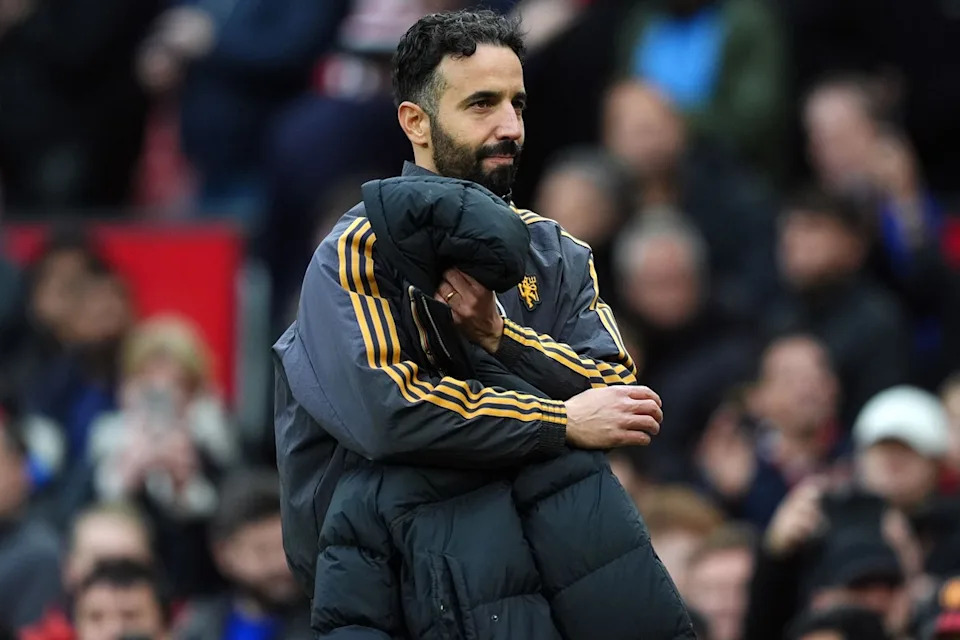
Ruben Amorim’s press conference at Leeds United may have offered up his final word at Manchester United, but that was largely because the Portuguese already had an idea he was facing up to his final days. Well-placed sources say the club’s hierarchy met last Thursday (1 January) to discuss the manager’s situation, among other issues with the team, which was quite a way to start the new year.
The nature of the 1-1 draw with Wolves is now seen as having brought a shift, as tension was rising.
Advertisement
Amorim, who had already made clear his own dissatisfaction with transfers, is said by sources to have been aware of this. It brought even more tension at another meeting with Jason Wilcox on Friday. Amorim spoke out privately before he spoke out publicly. He wanted to make big signings now, especially given Antoine Semenyo’s planned role and a midfield overhaul, to ensure Champions League football. The Portuguese is also said to have preferred Ollie Watkins in the summer.
United wanted to maintain a more strategic approach, and not constantly be driven by the short-term, with signings only made that allowed tactical variability. It all played into a situation where Amorim’s time as head coach – not manager, despite his protestations – was much shorter than anyone had planned.
Wilcox and the rest of the hierarchy found the situation was “unsustainable”.
How that came about, and what happens next, will tell a lot about the kind of club they are actually going to be under Sir Jim Ratcliffe’s leadership; whether this cycle of doom will finally be broken.
Advertisement
This football leadership have now got three major decisions wrong. There was the new contract for Erik ten Hag. There was the even shorter reign of Dan Ashworth. There is now the appointment of Amorim and everything around it, which Ashworth had cautioned against.

Ruben Amorim lasted a mere 14 months as Man United manager (PA Wire)
If head coaches aren’t allowed that much time to fail, what of those above them? Amorim appeared all too willing to lay bare tensions with Wilcox.
The club now face another huge moment. And yet the actual reason for the departure is still what it almost always is in football: results.
Some of United’s displays of late have been dismal, despite their league position. The 1-1 with Wolves was seen as a particular nadir because of how it came about. It wasn’t just that they failed to beat a team that statistically has a chance of being the worst Premier League side ever. It was that Amorim so needlessly and ill-advisedly reverted to his favoured 3-4-3, when all evidence indicated he should go a different route. This was a specific point of discussion in the meeting with Wilcox.
Advertisement
As one United source said “the sample size is big enough to evidence that this 3-4-3 shape has caused more problems than it has solved in games”.
The greater frustration was that he had recently shown a previously unseen adaptability, to start demonstrating progress.
Some major rivals were privately revealing a new respect for this United and felt the structure was coming together. That can partly be seen in the league position. And yet still Amorim could never quite break into that top four, despite multiple opportunities to do so. That now feels symbolic in itself.

Man United have been struggling along under Amorim (Getty Images)
It all means he leaves as, statistically, the worst Manchester United manager of the modern era. It is his obstinacy that perhaps speaks to the deeper reasons for this decision and what comes next for the club.
Advertisement
One of the reasons Ratcliffe initially wanted Amorim was for his personality and here he was displaying it. The great irony is that is kind of what you need to manage a club of this weight. It ended up being too much.
That ties in with the obstinacy over his formation. Again, he made clear what he was about. That message was reiterated as he spoke recently about what his divisive 3-4-3 actually required. The Portuguese ultimately felt that an Amorim United would never be at their maximum if they didn’t end up going his way in full, even if it involved pain in the short-term.
The problem was too much pain – mostly for those watching, especially in those games against West Ham United and Everton.
Some rival clubs do feel that Amorim has been dealt a bad hand. He would argue that recent regression has been due to major absences – most notably Bruno Fernandes – which is precisely why he wanted to make big signings now.
Advertisement
The decision ultimately came down to a classic issue in 21st-century football: how much “control” a coach has, and how much power in the game has gone to those above them.

Enzo Maresca’s surprise Chelsea departure increased the pressure on the Man United board to move on Amorim (Mike Egerton/PA Wire)
That is why Amorim’s outburst after the Leeds game was being described as “exactly like Enzo Maresca”. A further twist was that Chelsea’s own decision put more pressure on the United board to act.
Some senior sources feel all of this reflects this greater tension in the job in 2026. Most coaches have visions of being a Sir Alex Ferguson, but they are now mere hired hands. They haven’t earned the power, and yet still act as if they have it.
Advertisement
There’s also a feeling that Amorim himself hadn’t properly earned the right to speak in the way he did, that all of this showed he was out of his depth; that the weight of the United job just distorted his outlook
The flip side to those rivals who speak well of his team, is the others who think he was never up to this job and that every decision showed it. As one well-placed figure scoffed after the farce of the defeat to Grimsby Town, “a formation isn’t a system”, despite Amorim’s protestations about the absolutism of the latter.
Whether a mere 40-year-old ever truly understood the scope of the United job is now an irrelevance, though, a historic detail.

Sir Jim Ratcliffe must now ponder what comes next for United (PA Wire)
What matters next is how the current football leadership sees it; whether they really get what is required. Ratcliffe is already facing enough difficulties with his Ineos empire. He is now facing up to recurring difficulties at United.
Advertisement
Do they go for a pure head coach to fit into that structure like Kieran McKenna or Maresca himself? Do they allow a different manager a bit more leeway? Is Oliver Glasner’s strident personality what is required? Or would his formation bring about the same issues? Do they instead want what sources dismiss as a “yes man”.
So many of the same themes recur. The appointment of Amorim didn’t end the cycle. His final press conference just gave the definitive word on how difficult it is to break.