

Video assistant referee causes controversy every week in the Premier League, but how are decisions made and are they correct?
This season, we take a look at the major incidents to examine and explain the process both in terms of VAR protocol and the Laws of the Game.
Screenshot credit: BBC, TNT
 Andy Davies (@andydaviesref) is a former Select Group referee, with over 12 seasons on the elite list, working across the Premier League and Championship. With extensive experience at the elite level, he has operated within the VAR space in the Premier League and offers a unique insight into the processes, rationale and protocols that are delivered on a Premier League matchday.

Manchester City 2-1 Newcastle United
Referee: Tom Bramall
VAR: James Bell
Time: 42 minutes
Incident: Disallowed goal for offside.
What happened? Newcastle’s Dan Burn nodded home a Sandro Tonali free kick, only for the goal to be disallowed for offside. However, the replays showed that Burn was only in an offside position because he was pushed by City defender Rúben Dias.
VAR decision: VAR checked and cleared the on-field decision of no goal, confirming that an offside offence had been committed.
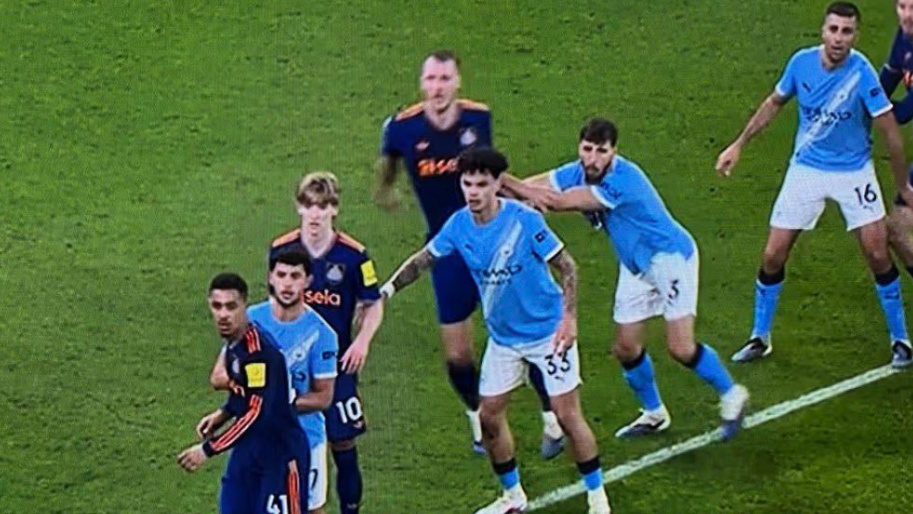
VAR review: VAR Bell would have been very aware that there was a deliberate action by Dias on Burn prior to the goal being scored. With the Newcastle defender clearly in an offside position when he scores, the VAR check centred around the possible foul leading up to the goal and the considerations of if meeting the criteria for a possible penalty kick.
It was a clear and deliberate push; however, the ball had not been played by Tonali at the moment the push occurred and therefore VAR was unable to intervene as the ball was not active.
Indeed, Law 12 says: Direct and indirect free kicks and penalty kicks can only be awarded for offences committed when the ball is in play.
Verdict: Watching the replays, Newcastle players and their supporters will feel hard done by in this situation, which is understandable. The reality is that this was a calculated action by Dias and the City backline, who clearly understood the law and timed the push to perfection.
Within the laws of the game, no offence can have been committed here and only the referee can intervene to manage physical contact prior to the ball being in play. VAR has no jurisdiction to get involved without the ball in play, unless an act of violent conduct has occurred, which was not the case here.
Time: 51 minutes
Incident: Possible second yellow card for Man City’s Bernardo Silva
What happened: Silva had already been cautioned but, minutes later, he appeared to jump into Burn with no attempt to play the ball. Was he fortunate not to receive a second yellow card?
VAR decision: The VAR did not view this a possible red card challenge and, under the current rules, they are unable to intervene in possible second yellow cards situations. Only in straight red decisions.
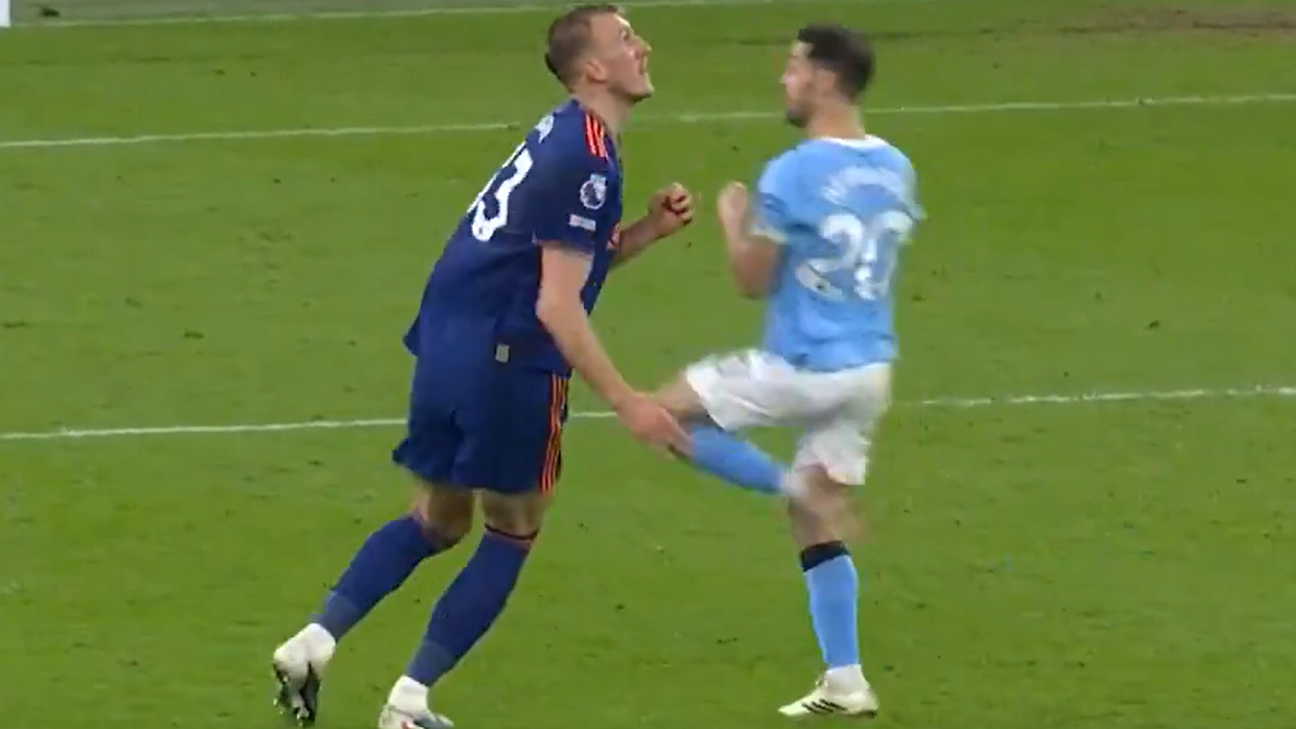
Verdict: For a referee to send a player off for a second yellow card in this type of situation, they are looking for the challenge to be above their threshold. It has to hit you immediately as a second yellow without a second thought, and you know it in the moment.
Watching this clip in isolation, Silva is fortunate not to have received a second yellow for what was an unnecessary challenge as he made no attempt to play the ball.
However, in the context of a physical game it wasn’t a standout moment and not one that would have caused Bramall too much discomfort in real time.
There are the moments in big games where you trust your instincts and I felt this was sensible game management as awarding a second yellow card was not the most obvious outcome.