

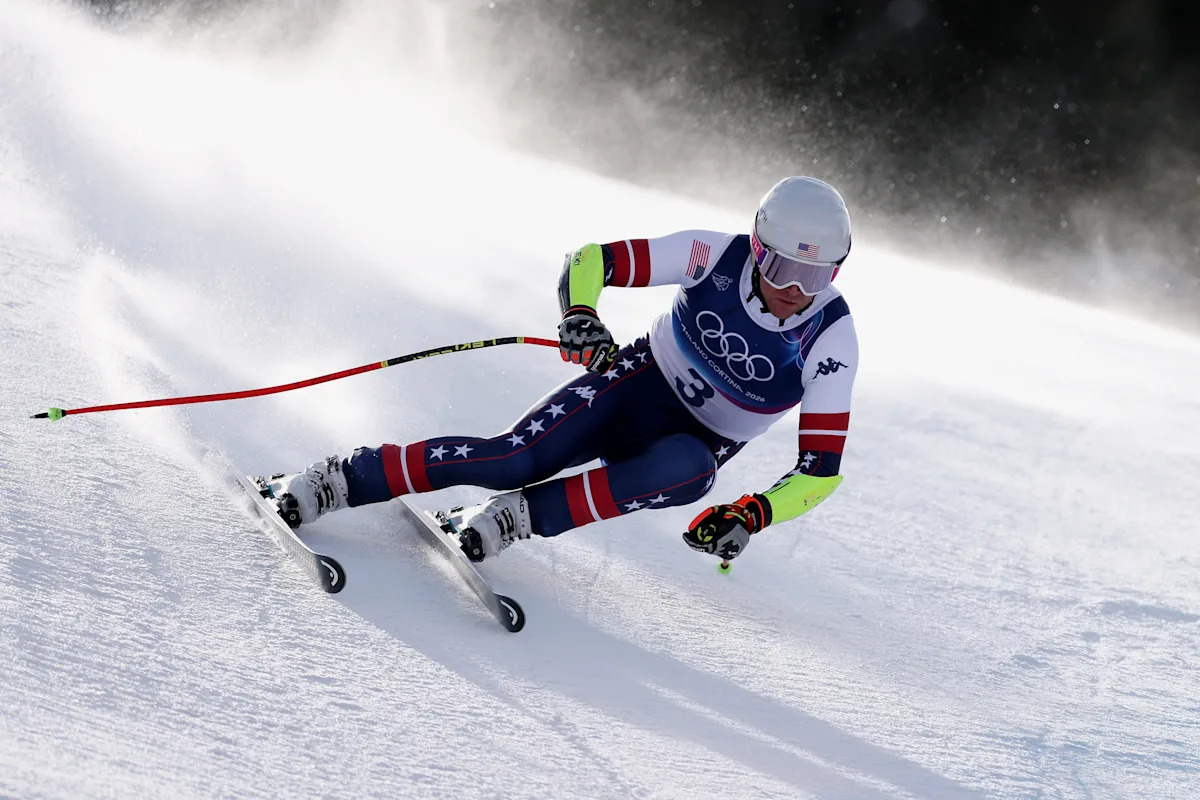
At the 2022 Olympics in Beijing, Ryan Cochran-Siegle missed out on a gold medal by just .04 seconds. While he didn’t come that close in 2026, Cochran-Siegle once again took home the silver medal in the super-G.
His performance this time around, however, was arguably more impressive. Cochran-Siegle was the third skier to make his run Wednesday, posting a time of 1:25.45.
While he briefly led the competition, a number of threats — including Switzerland’s Marco Odermatt — threatened to knock Cochran-Siegle off the podium.
Advertisement
It didn’t take long for the American to drop, as Switzerland’s Franjo von Allmen hopped into first with a time of 1:25.32. With Odermatt looming, though, Cochran-Siegle’s position was tenuous. Odermatt, who won the super-G at the World Cup in three straight years, was a massive favorite heading into the competition Wednesday. If he skied the way everyone expected, Cochran-Siegle would drop to third with standouts like Austria’s Raphael Haaser and Norway’s Adrian Smiseth Sejersted still to go.
But Odermatt took a slightly awkward turn about halfway through the race that knocked him off the gold-medal pace. That seemed to throw Odermatt off his game. After a blazing first portion of the race, Odermatt lost even more time after his midway stumble, finishing with a time of 1:25.60, putting him in line to take home the bronze.
That performance put Cochran-Siegle in a much better spot with a number of racers still left. With Odermatt failing to surpass Cochran-Siegle’s time, two other skiers would need to finish ahead of Cochran-Siegle to knock him off the podium.
While the odds were in his favor, it wasn’t a guarantee Cochran-Siegle would medal. In addition to Haaser and Smiseth Sejersted, there were three other skiers — Austria’s Vincent Kriechmayr and Stefan Babinsky and Italy’s Dominik Paris — in the event who finished ahead of Cochran-Siegle at the 2025 World Championships in the super-G.
Advertisement
Of that group, Haaser was already out of the medal conversation. He took the course just before Odermatt, posting a time of 1:25.89, which wasn’t good enough for a medal.
With Haaser out of the picture, Cochran-Siegle slowly watched as the other major threats fell short. Smiseth Sejersted, Babinsky and Paris didn’t come close to the podium and Kriechmayr wasn’t a major threat there either, despite posting a time in the top-10.
As the field quickly whittled down, it became apparent Cochran-Siegle’s spot on the podium was secure.
Allmen’s position was secure too. His time held up, giving him the gold in the super-G. It’s his third gold medal at the Milan Cortina Olympics, as Allmen finished first in the downhill and helped Switzerland win gold in the team combined event. Odermatt was able to hold on and win the bronze.
Advertisement
The medal is Cochran-Siegle’s second in the Olympics. He also took home the silver medal in the super-G in 2022, barely losing to Matthias Mayer in Beijing. Mayer shockingly retired later that year, and did not take part in the 2026 Winter Olympics.
This story will be updated.