
Even die-hard figure skating fans might not have heard of Jezabel Dabouis this time last week. Now, she is in the limelight. And not for the right reasons.
Dabouis was a judge in the free dance segment of the ice dance event at the Winter Olympics, where medals were decided.
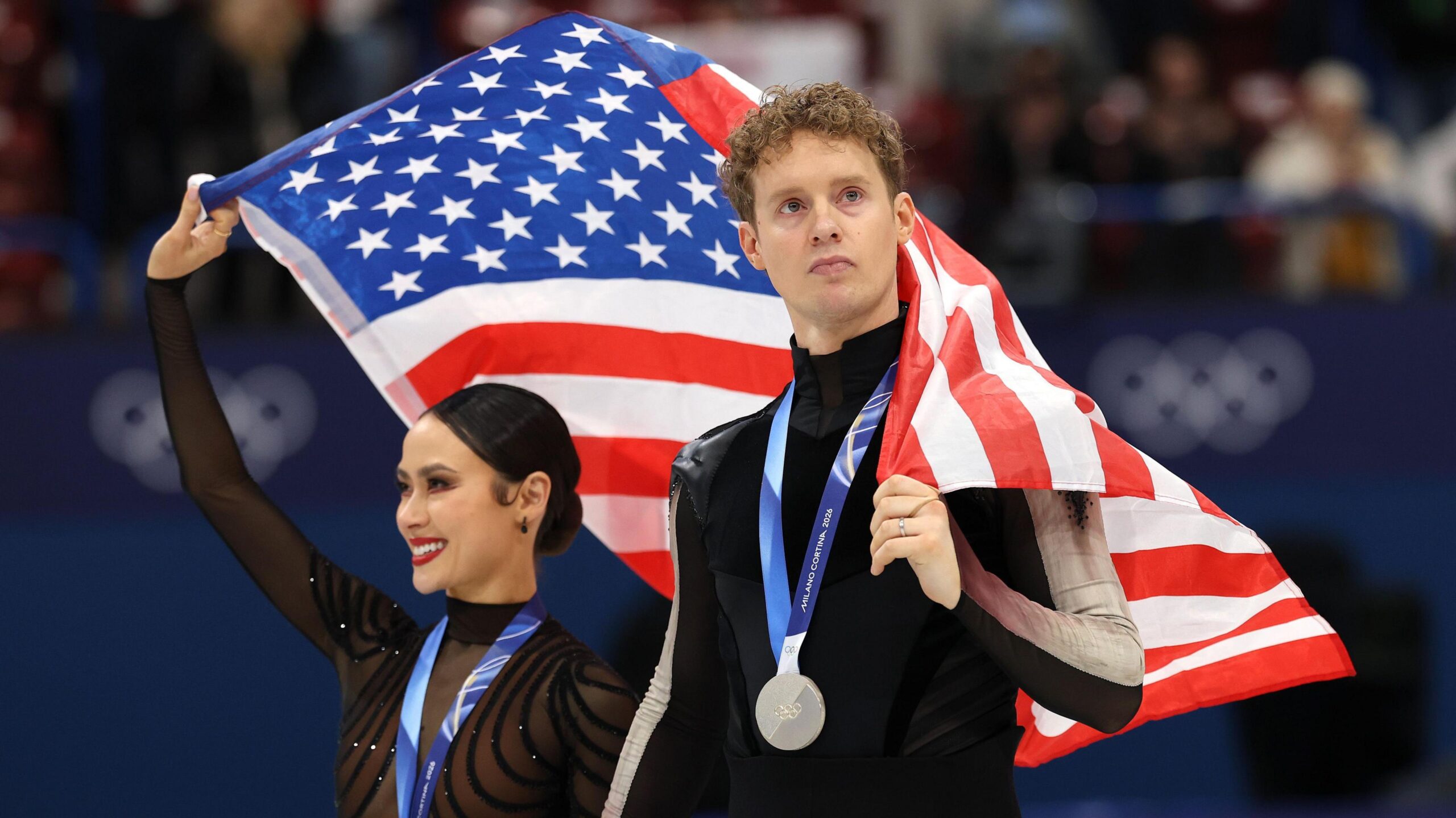
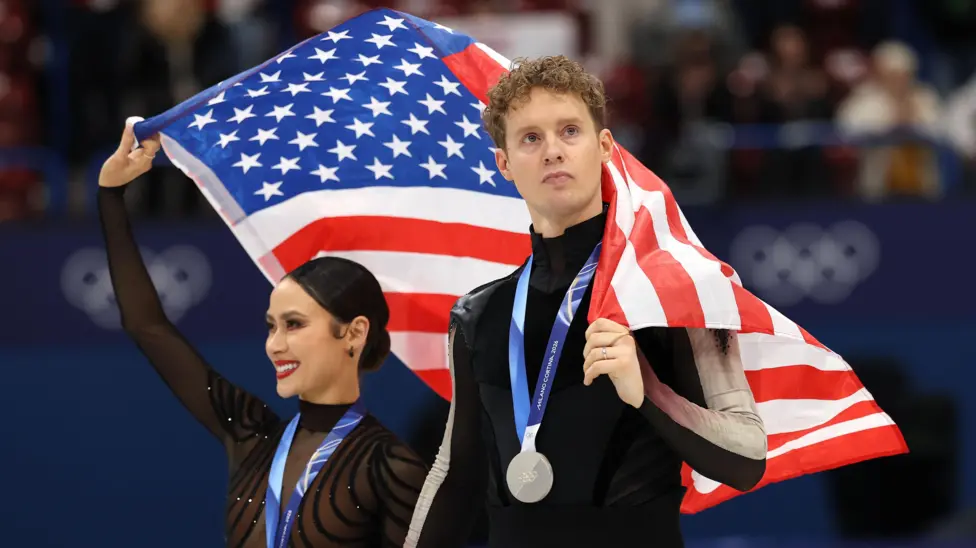
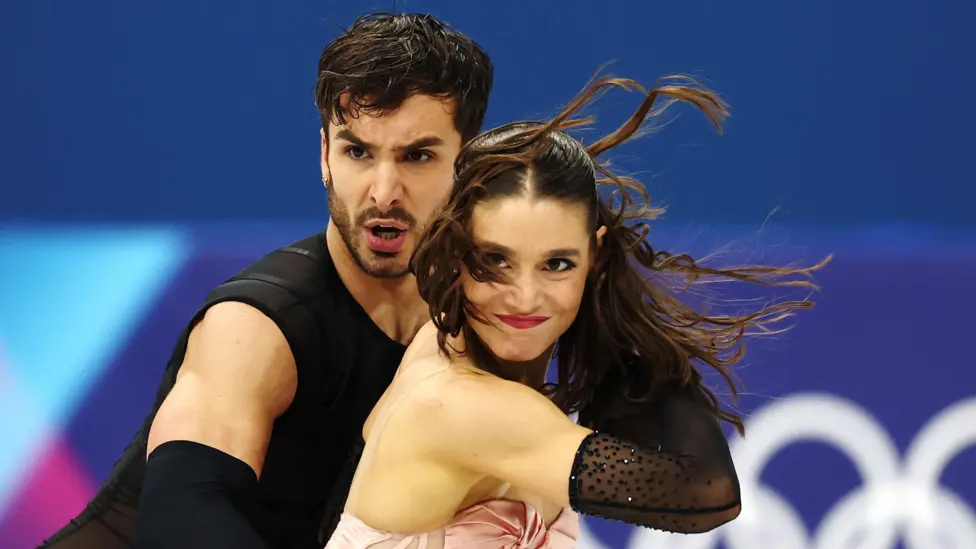
On Wednesday, the French couple of Laurence Fournier Beaudry and Guillaume Cizeron narrowly beat the American team of Madison Chock and Evan Bates.
Dabouis scored Fournier Baudry and Cizeron nearly eight points higher over three-time world champions and Milan-Cortina 2026 team event gold medallists Chock and Bates.
While seven of the nine judges gave Chock and Bates scores of more than 132, Dabouis awarded them 129.74 – the lowest score of anyone.
For Fournier Baudry and Cizeron – who performed after the Americans – she awarded them 137.45, their second highest total among the judges.
Because of the way figure skating is scored, her points for Chock and Bates did not count – the highest and lowest of the nine judges’ scores are disregarded – but they did for Fournier Baudry and Cizeron, helping nudge them into gold.
Just under 18,500 people had signed a Change.org petition by Saturday morning asking the International Skating Union (ISU) and International Olympic Committee (IOC) to investigate the scoring.
And silver medallist Chock has publicly questioned it too.
Immediately after the medal ceremony on Wednesday night, she told BBC Sport: «We put on our very best skates, all four of our performances [including the team event] were flawless to us. We are happy with how we skated; the rest is out of our hands.»
But by Friday, she had more to say.
«Any time the public is confused by results, it does a disservice to our sport,» the 33-year-old said. «I think it’s hard to retain fans when it’s difficult to understand what is happening on the ice.
«People need to understand what they’re cheering for and be able to feel confident in the sport that they’re supporting.»
The ISU has backed its judges, including Dabouis, following Chock’s criticism.
«It is normal for there to be a range of scores given by different judges in any panel and a number of mechanisms are used to mitigate these variations,» the ISU said, adding it has «full confidence in the scores given and remains completely committed to fairness».
-
Day-by-day guide to the Winter Olympics
-
15 hours ago
-
-
Full schedule including times of medal events
-
Winter Olympics 2026 medal table
‘Strange games’ are ‘destroying’ ice dance
While this is by far the highest profile controversy regarding figure skating judging in recent years, it is not an isolated incident by any means.
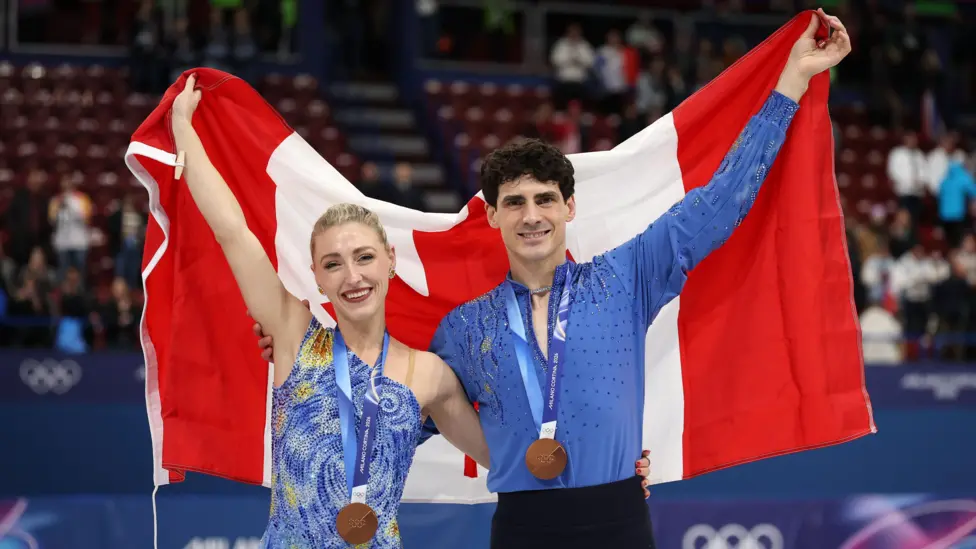
After the Olympic final, Piper Gilles and Paul Poirier of Canada were delighted. The veteran duo, in perhaps their final Olympics, saw off a competitive field to win bronze.
It was a very different scene two months earlier at the ISU Grand Prix Final in Nagoya. There, Gilles and Poirier dropped from third after the rhythm dance to fourth, finishing 0.06 points behind Lilah Fear and Lewis Gibson of Great Britain.
«It definitely is disheartening. We can’t lie, we’re human,» Gilles said at the time. «We skated two successful programs, and we emotionally and physically felt so in shape and powerful in those moments, only to kind of be left questioning what we’re doing, is it enough?»
Gilles then posted a graphic on social media featuring a quote stating: «Athletics carries its own set of truths, and those truths are diminished and manipulated by people with agendas.» She tagged the ISU.
After winning bronze in Milan, she told BBC Sport: «Our main focus was to make a moment for ourselves and let the judging be the judging.»
In fact, all three medal winning couples in Milan have criticised the ISU and judges in recent months.
In November, Cizeron said he was not happy with their rhythm dance score at an Grand Prix event in Finland.
«I see some strange games being played that are destroying ice dance,» he said. «I don’t think I’ve ever been to a competition like this in my career, from a judging standpoint.»
Naturally, with any sport where the results are determined by a panel of judges rather than a definitive factor – who scores the most goals or crosses the finish line first – there will always be differences of opinion.
The problems come when those differences of opinion are among experts – those who have won the sport’s biggest prizes.
In Milan, Fear and Gibson set a season-best score for their Spice Girls-themed rhythm dance in the team event – and looked to have improved in the individual competition.
«They were better here than in the team event,» 1980 Olympic gold medallist and BBC pundit Robin Cousins said after their performance.
But the Brits were then scored lower than they had been in the team event. That left them in fourth after the rhythm dance, and they eventually finishing seventh overall after a mistake by Fear.
There have been questions in the team event and men’s competition too, where the showy but sometimes error-prone Ilia Malinin consistently scores higher than his often-tidier Japanese rival Yuma Kagiyama, in part because his free skate gets such high technical marks because of the tricks he attempts, meaning he is almost guaranteed to win even if he is not perfect – although as this Olympics proved, there are limits to that.
Winter Olympics 2026
6-22 February
Milan-Cortina
Watch two live streams and highlights on BBC iPlayer (UK only), updates on BBC Radio 5 Live and live text commentary and video highlights on the BBC Sport website and app.
Is AI the future of figure skating judging?
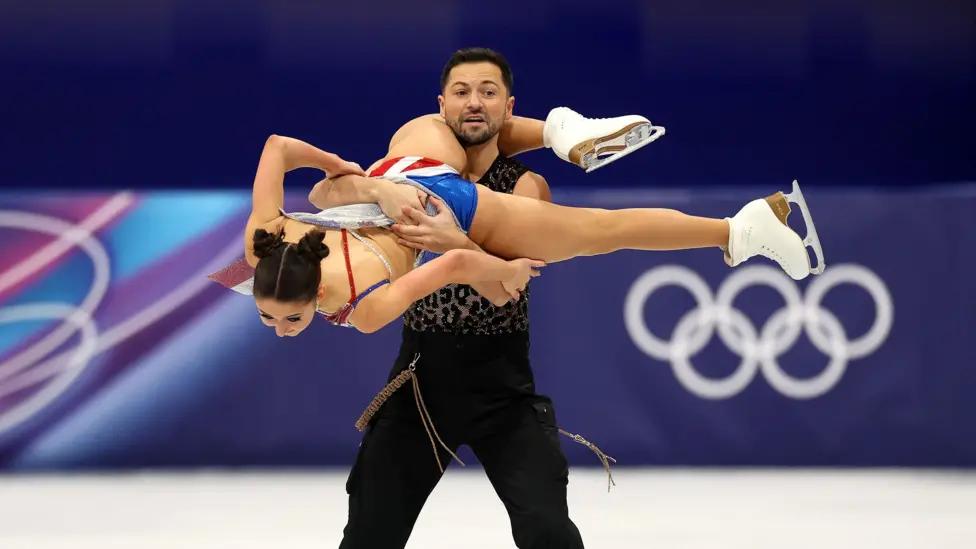
The ISU knows its sport is not perfect, and that judges can come in for intense criticism over their opinions – and that is moulding the future.
Changes will be introduced for the 2026-27 season – starting in July – which means these Olympics are the last time we’ll see the judging in its current form.
It comes as part of ‘ISU Vision 2030’ which among other things will overhaul the judging system to make the decisions easier to understand and less open to criticism.
And as part of the reforms, figure skating is turning to AI.
The International Skating Union (ISU) has been testing six high-resolution cameras around the rink at competitions over the past two years that use AI to track skaters’ movements and analyse technical elements such as jump rotation, height, distance travelled, edge used in jumps and spin positions in real time. It allows for split second calls that the human eye cannot make.
ISU director general Colin Smith said the goal was first to use the data to support judges and then potentially integrate it into the actual scoring system. It will be used in singles first, before being utilised in ice dance – more vulnerable to judging complaints as it has a greater focus on creativity – should it be viable.
Judges will be able to focus «on the artistry, on the human element, and the computer vision is looking more at the technical, the cut-and-dry aspects», he told Reuters.
But will it put an end to the drama? Don’t bet on it.
-
Meet France’s controversial ice dance Olympic champions
-
2 days ago
-
-
Malinin, Minion and Milan’s most emotional moment
-
3 days ago
-
-
Shaidorov wins gold as ‘Quad God’ Malinin crumbles
-
15 hours ago
-
Be warned, the next section gets complicated
To fully understand the issue, we must look at how figure skating is scored.
The current method was introduced after the 2002 Salt Lake City scandal, where Canadian figure-skaters Jamie Sale and David Pelletier were initially denied victory because one of the judges felt under pressure to vote for their Russian rivals. Sale and Pelletier were later awarded joint gold.
At Milan-Cortina 2026, there are also technical specialists who identify the elements the skater is performing in real time and the difficulty of the element.
The panel of nine judges meanwhile concentrate on marking the quality of each element in the skaters’ programs. For the Olympics, these nine are drawn from a pool of 13.
Every required element is assigned a base value. During the program, judges will award a grade of execution (GOE) within a range of plus- or minus-five to each element performed.
The highest and lowest of the nine scores are deleted, and the mean of the other seven gives the GOE for that element. The scores of all elements are added at the end to give the technical score.
In addition, there is the components score. The judges will award points on a scale from 0.25 to 10 for the program components to grade the overall presentation.
The final score is calculated by adding the element score and the program component scores and subtracting deductions for things like falls.
The scores of the two categories are added and the result constitutes the final score. The participant or couple with the highest total score wins.
Got all that?
Related topics
- Winter Sports
- Winter Olympics
- Figure Skating